Posted on

Flow State Resources for Students: Achieve Peak Study Performance

Flow State Resources for Students: Achieve Peak Study Performance

Flow State Resources for Students: In the quest for academic success, understanding and mastering the Flow State” concept can be a game-changer for students. This article introduces a curated list of the best resources to deepen your knowledge on achieving this peak state of focus and productivity while studying. By diving into these tools, learners can uncover strategies and techniques to enhance their concentration, reduce distractions, and ultimately excel in their studies.

For those seeking the perfect environment to foster this state of hyper-focus, Studeo Spaces Study Hub in Sampaloc offers an optimal setting. Designed to eliminate distractions and promote peak performance, Studeo Spaces helps individuals truly “Get Into the Flow,” turning study sessions into highly productive and immersive experiences.

Have you ever found yourself so deeply immersed in a task that time seems to fly by, and you perform at your best? This state is known as “Flow,” it can be incredibly beneficial, especially when studying. The Flow State is a concept that many learners aspire to achieve because of its potential to boost productivity and learning outcomes significantly. But how exactly can one learn more about Flow State in the context of studying? Let’s delve into some of the best resources available to help you understand and achieve this optimal state of focus.

Flow State Resources: Understanding Flow State

What is Flow State?

Flow State, often referred to simply as “Flow,” is a psychological concept that describes a mental state of deep immersion and engagement in a particular task. When in Flow, individuals experience heightened focus, creativity, and productivity. Mihály Csíkszentmihályi, a renowned psychologist, introduced this concept and highlighted its importance in work and learning environments.

Why is Flow State Important for Studying?

Achieving a Flow State while studying can lead to several benefits. It allows students to concentrate, process information more efficiently, and retain knowledge better. When in Flow, distractions fade away, and students can achieve a higher academic performance.

Flow State Resources: Best Books

“Flow: The Psychology of Optimal Experience” by Mihály Csíkszentmihályi
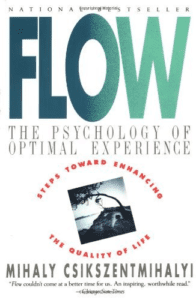
Flow State Resources for Students: Flow: The Psychology of Optimal Experience
Flow: The Psychology of Optimal Experience” by Mihály Csíkszentmihályi

This seminal work by Csíkszentmihályi is a must-read for anyone interested in understanding Flow State. The book provides a comprehensive overview of the concept, backed by research and real-life examples. It lays the foundation for understanding how Flow can be achieved and its impact on productivity and learning.

“Deep Work: Rules for Focused Success in a Distracted World” by Cal Newport

Flow State Resources for Students: Deep Work: Rules for Focused Success in a Distracted World
Deep Work: Rules for Focused Success in a Distracted World” by Cal Newport

Cal Newport’s “Deep Work” focuses on the importance of deep, undistracted work and its benefits. The book provides practical tips and strategies for minimizing distractions and maximizing focus, essential for achieving a Flow State.

“Mindfulness for Students” by Stella Cottrell
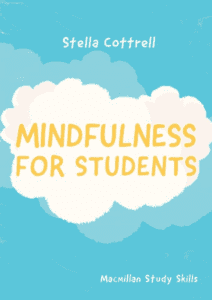
Flow State Resources for Students: Flow: "Mindfulness for Students" by Stella Cottrell
Mindfulness for Students” by Stella Cottrell

This book integrates mindfulness practices with study techniques to help students focus better and concentrate. It is a valuable resource for those looking to incorporate mindfulness into their study routine to reach Flow State.

Flow State Resources: Online Courses and Webinars

Coursera: “Learning How to Learn: Powerful Mental Tools to Help You Master Tough Subjects”

This popular course, offered by McMaster University and the University of California San Diego, teaches students various learning techniques to enhance focus and retention. It covers crucial aspects like chunking, tackling procrastination, and achieving a Flow State while studying.

Udemy: “Mastering the Art of Focus: Tips for Achieving Flow State”

Udemy offers various courses targeted at helping individuals enhance their focus and productivity. This course specifically delves into the psychology of Flow State and provides actionable strategies for students to reach this optimal learning condition.

Flow State Resources: Research Papers and Articles

“The Concept of Flow” by Mihály Csíkszentmihályi (Scientific American Article)

This article is an excellent introduction to the concept of Flow State, written by its pioneer. It gives a succinct overview of Flow, its characteristics, and its relevance in various aspects of life, including studying.

“Flow in Education: A Systematic Literature Review” (Journal of Educational Psychology)

This research paper provides a comprehensive review of the existing literature on Flow State in the context of education. It explores how Flow can be facilitated in educational settings and its impact on students’ learning outcomes.

Flow State Resources: Apps and Tools

Forest

Forest is an app designed to help users stay focused by planting virtual trees. The trees grow while you remain focused on your task, and if you leave the app, the trees die. It’s a fun and engaging way to minimize distractions and remain in Flow.

Pomodoro Timer

The Pomodoro Technique is a time management method that uses a timer to break down work into intervals. There are various Pomodoro apps available that can help students maintain focus and achieve Flow State by working in short, intense bursts followed by short breaks.

Flow State Resources: Tips for Achieving Flow State

Set Clear Goals

Understanding what you want to achieve in each study session can help you stay focused. Break down your tasks into manageable goals to make engaging fully with your work easier.

Eliminate Distractions

Create a study environment that is free from distractions. This might mean turning off your phone, finding a quiet place to study, or using apps to block distracting websites.

Balance Challenge and Skill

Flow is most easily achieved when there is a balance between the challenge of the task and your skill level. Tasks that are too easy can become tedious, while those that are too difficult can be frustrating. Aim to work on tasks that push your abilities without overwhelming you.

Take Regular Breaks

Short breaks between study sessions can help maintain focus and energy levels. Techniques like the Pomodoro Method encourage taking breaks and can be helpful in staying in Flow.

Incorporate Mindfulness Practices

Mindfulness practices such as meditation can improve focus and reduce stress, making it easier to achieve Flow State. Consider incorporating brief mindfulness exercises into your daily routine.

Flow State Resources: Role of Environment

Importance of a Conducive Study Space

The physical environment plays a significant role in achieving Flow State. A well-organized, quiet, and comfortable study space can significantly enhance your ability to focus and immerse yourself in your work.

Design Elements that Promote Flow

Certain design elements can help create an environment conducive to Flow. These include good lighting, a clutter-free workspace, and ergonomic furniture. Additionally, having access to resources such as books, the internet, and writing materials can facilitate seamless study sessions.

How Studeo Spaces Study Hub Can Help
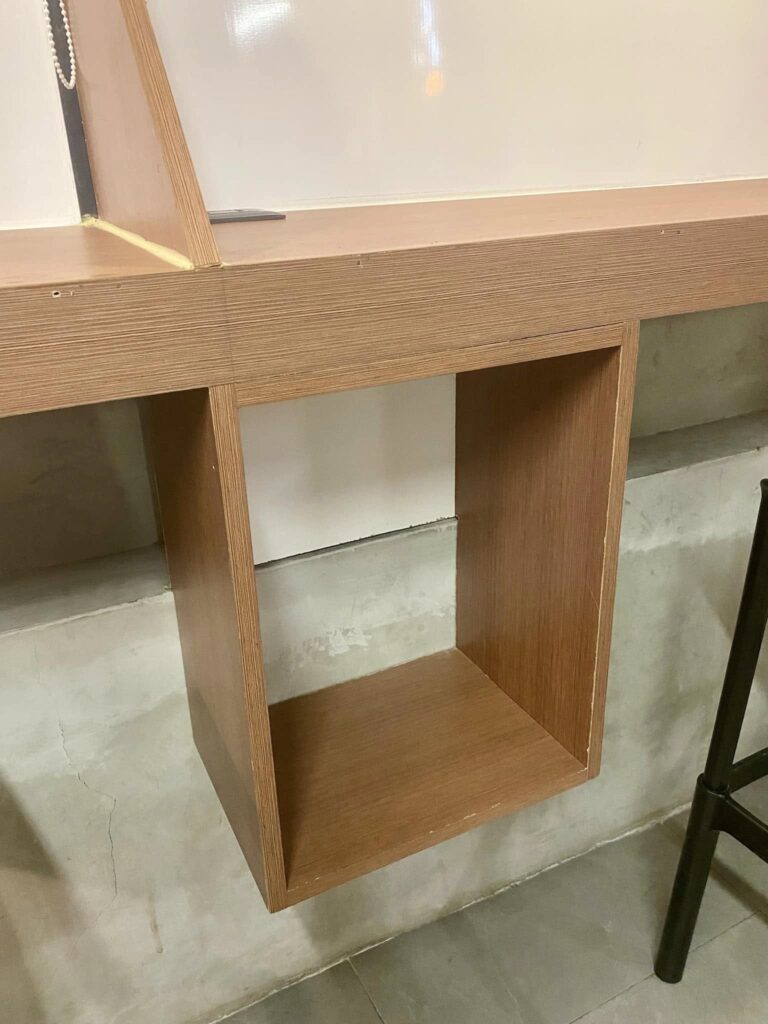
Studeo Spaces Study Hub’s environment is meticulously designed to promote Flow State. Located in Sampaloc, this premier study space offers an ambiance that minimizes distractions and maximizes focus. The hub provides comfortable seating, adequate lighting, and necessary study resources, allowing individuals to immerse themselves fully in their tasks.

Flexible Access

Studeo Spaces Study Hub is accessible seven days a week, from 8:00 AM to 3:00 AM. This flexibility allows students to choose study times that align with their peak productivity hours, further enhancing their ability to achieve a Flow State.

Supportive Community

Being surrounded by like-minded individuals can enhance motivation and focus. Studeo Spaces Study Hub provides a supportive community of students and professionals equally committed to achieving their study goals.

Flow State Resources: Conclusion

Achieving a Flow State can significantly improve your study efficiency and academic performance. With the right resources, strategies, and environment, reaching this optimal state of focus is entirely achievable. Whether through books, online courses, techniques, or dedicated study spaces like Studeo Spaces Study Hub, there are numerous ways to learn about and attain Flow State.

Studeo Spaces Study Hub’s mission is to provide an environment that fosters hyper-productivity and concentration. Whether preparing for exams or enhancing your professional skills, this study hub offers the perfect setting to “Get Into the Flow” and achieve your goals.

For anyone serious about unlocking their full potential and achieving the best possible results in tests and examinations, Studeo Spaces Study Hub in Sampaloc is the ideal place to study. With its supportive environment, flexible hours, and commitment to helping individuals reach a state of Flow, it stands out as a top choice for students and professionals.

Frequently Asked Questions About Flow State Resources

What are Flow State Resources, and how can they help me study more effectively?

Flow State Resources are tools, techniques, and environments designed to help you achieve a state of deep focus and immersion, known as “flow,” while studying. These resources can include books, online courses, apps, and physical study spaces. Using these resources can enhance your concentration, process information more efficiently, and retain knowledge better, leading to improved academic performance.

What types of Flow State Resources are available for students?

There are several types of flow state resources available to students:
Books: Such as “Flow: The Psychology of Optimal Experience” by Mihály Csíkszentmihályi and “Deep Work” by Cal Newport provide theoretical understanding and practical strategies for achieving flow. “Mindfulness for Students” by Stella Cottrell integrates mindfulness for focus.
Online Courses: Platforms like Coursera and Udemy offer courses that teach techniques for enhancing focus and achieving flow, such as “Learning How to Learn” and “Mastering the Art of Focus.”
Apps: Apps like Forest and Pomodoro Timers are designed to minimize distractions and manage study time effectively.
Study Environments: Dedicated spaces like Studeo Spaces Study Hub are designed to eliminate distractions and promote a focused learning environment.

How can books be helpful in Flow State Resources?

Books like “Flow: The Psychology of Optimal Experience” provide a foundational understanding of flow and how it can be achieved. They offer insights into the psychological aspects of flow, backed by research, and provide real-life examples of how to apply these principles. Other books, like “Deep Work,” offer practical advice on minimizing distractions to reach a flow state.

What are some online courses Flow State Resources I can use?

Online courses like “Learning How to Learn” on Coursera teach you various learning techniques to improve focus and retention, which can help you achieve a flow state. Udemy offers courses such as “Mastering the Art of Focus,” which delve into flow psychology and offer actionable strategies. These courses are designed to provide practical skills for enhancing focus during study.

How do apps act as Flow State Resources, and which are recommended?

Apps can be effective flow state resources by helping you manage distractions and maintain focus. Forest is an app that uses gamification to keep you focused by planting a virtual tree that dies if you switch away from the app6. Pomodoro Timer apps break your study time into focused intervals, with short breaks in between to optimize your focus.

What makes a study environment a valuable Flow State Resource?

A conducive study environment is a significant flow state resource because it minimizes distractions and promotes focus [9]. Key elements include a quiet, comfortable space, good lighting, a clutter-free workspace, and ergonomic furniture. Access to necessary study resources, such as books and the Internet, is also beneficial. Studeo Spaces Study Hub is specifically designed to provide this kind of environment.

How can Studeo Spaces Study Hub serve as a Flow State Resource?

Studeo Spaces Study Hub is designed to be a premier flow state resource for students by providing a distraction-free, focused environment. The space offers comfortable seating, good lighting, and necessary study resources. It also provides a supportive community, which can boost motivation and focus. Its flexible access allows students to study at peak productivity hours.

What other techniques can be used as Flow State Resources for studying?

Other valuable flow state resources include techniques such as:
Setting clear goals: Breaking tasks into manageable goals can help maintain focus.
Eliminating distractions: Creating a study environment free from distractions, such as turning off your phone.
Balancing challenge and skill: Working on challenging tasks yet within your capabilities.
Taking regular breaks: Using methods like the Pomodoro Technique to incorporate short breaks.
Incorporating mindfulness: Practicing mindfulness exercises like meditation to reduce stress.

Key Glossary Terms for Flow State Resources

  • Flow State: A psychological state of deep immersion and engagement in a task characterized by heightened focus, creativity, and productivity.
  • Mihály Csíkszentmihályi: A renowned psychologist who introduced and popularized the concept of Flow State.
  • Deep Work: A term coined by Cal Newport referring to the ability to focus without distraction on a cognitively demanding task, a skill crucial for achieving Flow.
  • Mindfulness: The practice of being present and fully engaged in the moment, which can help reduce stress and improve focus.
  • Pomodoro Technique: A time management method that breaks down work into intervals, typically 25 minutes, separated by short breaks.
  • Conducive Study Space: A physical environment that promotes focus and reduces distractions, enhancing the ability to achieve Flow.
  • Studeo Spaces Study Hub: A premier study space in Sampaloc designed to foster hyper-productivity and concentration through its conducive environment.
  • Ergonomic Furniture: Furniture designed to promote comfort and good posture, which reduces physical distractions and contributes to achieving Flow.convert_to_textConvert to source
Posted on

Expert Tips For Board Exam Preparation

Expert Tips For Board Exam Preparation

In “Expert Tips For Board Exam Preparation,” readers are guided through essential strategies to excel in their upcoming exams, from creating a structured study schedule to employing active learning techniques. To amplify the effectiveness of their study routines, the article introduces Studeo Spaces Study Hub, a premier facility in Sampaloc.

At Studeo Spaces Study Hub, students and professionals can immerse themselves in a hyper-productive environment that fosters concentration and focus. Open every day of the week, this dedicated space provides the perfect setting to achieve peak performance and reach that coveted state of flow, ensuring that individuals are fully prepared to ace their exams. Have you ever felt overwhelmed while preparing for board exams?

Whether it’s the sheer volume of topics to cover or the pressure to perform well, preparing for these critical tests can be daunting. But fear not, as we are here to share expert tips that will help streamline your study process and make your board exam preparation more manageable.

Understanding the Importance of Effective Preparation

Adequate board exam preparation is crucial for various reasons. It ensures you cover all necessary material and builds your confidence. Well-prepared students tend to perform better because they are less anxious and more familiar with what to expect.

Establishing a Study Plan

Creating a detailed study plan helps you allocate study time efficiently across subjects. Here are some steps to guide you:

  1. List Subjects and Topics: List all the subjects and topics you must cover. This will give you an overview of your responsibilities.
  2. Prioritize Important Topics: Identify which topics carry more weight or are more difficult for you. Prioritize these in your schedule.
  3. Set Realistic Goals: Break down the syllabus into manageable sections and set achievable goals within your timeframe.

Utilizing Study Techniques

Effective study techniques can significantly boost your retention and understanding. Here are a few popular methods:

  1. Active Recall: This involves actively remembering information without looking at your notes. It improves memory retention.
  2. Spaced Repetition: Spacing out your study sessions and revisiting topics over time helps reinforce learning.
  3. Pomodoro Technique: Break your study time into intervals, usually 25 minutes of focused study followed by a 5-minute break. This helps maintain concentration.

The Role of Practice Tests

Practice tests are a vital component of board exam preparation. They help you familiarize yourself with the format and timing of the actual exam, reduce test anxiety, and identify areas where you need further study.

The Unique Advantages Offered by Studeo Spaces Study Hub

At Studeo Spaces Study Hub, they believe in creating a space that fosters a state of hyper-productivity and concentration known as the “flow state.” This premier destination in Sampaloc is meticulously designed to help individuals unleash their focus and unlock their full potential.

Why Choose Studeo Spaces Study Hub?

Studying for exams requires a conducive environment, free from distractions. Studeo Spaces Study Hub offers several unique advantages:

  1. Optimal Study Environment: Unlike traditional co-working spaces, the facility is tailored for studying or working. It promotes peak performance and productivity.
  2. Ever-Accessible: Open every day, including weekends and holidays, from 8:00 AM to 3:00 AM, you can access this space whenever you need it.
  3. Convenient Location: Situated at the corner of Dapitan and Dela Fuente Streets in Sampaloc, Manila, it’s easily accessible and convenient for students.

Their tagline, “Get Into the Flow,” summarizes their commitment to helping individuals reach a state of hyper-focus and productivity. Whether preparing for exams or looking to enhance your professional performance, Studeo Spaces Study Hub provides the perfect environment for you to thrive.

Preparing for Exams: Subject-Specific Tips

Different subjects require different preparation strategies. Here are some tips tailored for common subjects:

Mathematics

Mathematics is a subject that requires practice and conceptual understanding. Here’s how to approach it:

  1. Understand Concepts: Focus more on understanding the concepts than rote learning.
  2. Practice Regularly: Solve different types of problems to gain familiarity.
  3. Review Mistakes: Learn from your mistakes during practice to avoid them in the exam.

Science

Science subjects often involve both theory and practical knowledge. Here are some tips:

  1. Use Diagrams and Charts: Visual aids can help you understand complex concepts more quickly.
  2. Conduct Experiments: If possible, conduct small experiments to reinforce theoretical knowledge.
  3. Summarize Notes: Create summary notes for quick revision.

Humanities

Subjects in the humanities often require extensive reading and writing. The following tips can help:

  1. Take Detailed Notes: While reading, take notes to summarize key points.
  2. Practice Writing Essays: Develop essay-writing skills by practicing often.
  3. Engage in Discussions: Discuss topics with peers to explore different perspectives.

Mental and Physical Well-being

Preparing for board exams isn’t just about studying. It’s equally important to take care of your mental and physical health.

Managing Stress

Exams can be stressful, but managing stress is crucial for success:

  1. Practice Mindfulness: Techniques like meditation and deep-breathing exercises can help you stay calm.
  2. Stay Positive: Maintain a positive outlook and remind yourself of your strengths.

Physical Health

Your physical health can significantly affect your mental clarity and energy levels:

  1. Regular Exercise: Incorporating exercise into your routine helps improve focus and reduces stress.
  2. Healthy Diet: A balanced diet rich in nutrients supports cognitive function.
  3. Adequate Sleep: Ensure you get sufficient sleep, especially before the exam day.

Leveraging Study Groups and Resources

Studying in a group can offer new perspectives and make learning more interactive.

Forming Study Groups

Joining or forming study groups can be highly beneficial:

  1. Collaborative Learning: Discussing and explaining concepts to peers enhances understanding.
  2. Motivation and Support: Group members can motivate and support each other through preparation.

Utilizing Online Resources

In today’s digital world, numerous online resources can aid your exam preparation:

  1. Educational Websites: Websites like Khan Academy and Coursera offer valuable academic resources.
  2. Forums and Study Communities: Platforms like Reddit and Quora have dedicated spaces for students to ask questions and share knowledge.
  3. Apps and Tools: Tools like Evernote for note-taking and Quizlet for flashcards can enhance your study routine.

Crafting Your Study Schedule

An effective study schedule balances study time, breaks, and rest periods.

Time Management

Effective time management involves distributing your time in a way that maximizes productivity:

  1. Daily and Weekly Plans: Create daily and weekly study plans that allocate time for each subject.
  2. Balanced Routine: Include breaks and leisure activities to avoid burnout.

Tracking Progress

Keeping track of your progress helps you stay on track with your study schedule:

  1. Regular Reviews: Review your schedule regularly to ensure you meet your goals.
  2. Adjust as Needed: Be flexible and make adjustments based on your progress.

Conclusion

Preparing for board exams can be challenging, but it becomes more manageable with the right strategies and resources. From creating a detailed study plan and utilizing effective study techniques to leveraging study groups and maintaining a healthy lifestyle, every step you take moves you closer to success.

Remember, the environment in which you study plays a crucial role in your productivity. Studeo Spaces Study Hub offers a perfect setting to help you get into the flow and maximize your study efficiency. Whether you’re tackling complex math problems or diving into historical texts, they provide an optimal space to help you thrive.

So, start your preparation today with these expert tips, and approach your board exams with confidence and determination. Happy studying!

Frequently Asked Questions About Expert Tips For Board Exam Preparation

What is the importance of adequate preparation for board exams?

Adequate preparation is crucial for covering all necessary material, building confidence, and reducing anxiety, leading to better exam performance. Well-prepared students are more familiar with what to expect, contributing to their success.

How should I create an effective study plan for my board exam?

To create an effective study plan, you should start by listing all subjects and topics, then prioritize those that carry more weight or are more challenging. Break down the syllabus into manageable sections and set achievable goals within your timeframe, ensuring the plan is realistic.

What are some effective study techniques that can improve memory retention?

Some effective study techniques include active recall (remembering information without notes), spaced repetition (revisiting topics over time), and the Pomodoro technique (focused study intervals with short breaks). These techniques aim to reinforce learning and improve concentration.

Why is it beneficial to use practice tests when preparing for board exams?

Practice tests are essential for familiarizing yourself with the exam format and timing, reducing test anxiety, and identifying areas where further study is needed. They allow you to simulate exam conditions and pinpoint your weaknesses.

What are the advantages of studying at Studeo Spaces Study Hub compared to other co-working spaces?

Studeo Spaces Study Hub provides an optimal study environment tailored explicitly for focused work and peak performance, unlike traditional co-working spaces. It’s open every day, including weekends and holidays, and its location in Sampaloc is convenient for students, allowing for accessible and consistent study sessions.

How should I approach studying math, science, and humanities subjects differently?

For math, focus on understanding concepts, practicing solving various problems, and reviewing mistakes. For science, use diagrams, conduct experiments, and create summaries. Take detailed notes, practice essay writing, and engage in discussions in humanities. Tailoring your study approach to the subject can improve your understanding and retention.

How can I manage stress and maintain my well-being during exam preparation?

To manage stress, incorporate mindfulness techniques like meditation and maintain a positive outlook. For physical well-being, including regular exercise, maintaining a healthy diet, and ensuring adequate sleep contribute to mental clarity and energy.

How can I leverage study groups and online resources to enhance my board exam preparation?

Study groups allow for collaborative learning and offer motivation and support. Online resources like educational websites, forums, and study apps provide a wealth of information and tools to aid your study. Utilizing these can make your learning experience more interactive and comprehensive.

Posted on

Key Strategies For Acing Board Exams

In mastering board exams, adopting key strategies is essential for success. From active revision techniques to time management hacks, much must be learned about making study sessions effective. An exceptional place like Studeo Spaces Study Hub can be instrumental in this journey. Located in Sampaloc, Studeo Spaces is a haven for those seeking hyper-productivity and intense focus, helping students escape distractions and enter the coveted “Flow State.”

This environment is meticulously designed to foster peak performance, making it easier for individuals to immerse themselves fully in their tasks. Open every day from 8:00 AM to 3:00 AM, Studeo Spaces provides the ideal setting for aspiring professionals to prepare meticulously for their exams and achieve their academic goals. Have you ever wondered what strategies can take your board exam preparation to the next level?

Acing board exams is no small feat. It requires dedication, strategic planning, and, sometimes, outside help. This article will delve into proven strategies that can help you excel in your board exams. We’ll also explore how an optimal study environment, like the one that Studeo Spaces Study Hub offers, can significantly enhance your preparation.

Key Strategies For Acing Board Exams

Introduction to Board Exams

Board exams represent a crucial phase in a student’s academic journey. They often determine future educational opportunities and can significantly influence career paths. Understanding the importance of these exams and the need for a thoughtful study approach is the first step in achieving success.

Importance of Board Exams

Board exams are standardized assessments to measure a student’s proficiency in various subjects. They serve multiple purposes:

  1. Academic Benchmark: They measure students’ academic capabilities relative to their peers.
  2. College Admissions: Performance in board exams often plays a pivotal role in college admissions, scholarships, and other academic opportunities.
  3. Foundation for Future: They are foundational for future professional exams and career opportunities.

Given their importance, it’s essential to approach board exam preparation with the right strategies and mindset.

Developing a Study Plan

Creating a well-structured study plan is essential. A realistic and comprehensive study schedule helps in covering all relevant topics systematically and efficiently.

Setting Clear Goals

Setting clear goals provides direction and motivation. Here’s how to get started:

  1. Identify Subjects and Topics: List all the subjects and break them down into smaller topics.
  2. Allocate Time: Assign time slots to each topic based on its difficulty and your proficiency.
  3. Set Milestones: Small milestones can make the study process less overwhelming and more manageable.
DayMorning (8 AM – 12 PM)Afternoon (1 PM – 5 PM)Evening (6 PM – 9 PM)
MonMath: AlgebraEnglish: ReadingScience: Biology
TueScience: PhysicsMath: GeometryHumanities: History
WedEnglish: WritingScience: ChemistryMath: Trigonometry

Creating a Study Timetable

A timetable helps in maintaining consistency and regularity in studying. Ensure to incorporate breaks and leisure activities to avoid burnout.

Daily Routine Example

TimeActivity
8:00 AMWake up and breakfast
9:00 AM – 12 PMStudy Session 1
12:00 PM – 1 PMLunch Break
1:00 PM – 4 PMStudy Session 2
4:00 PM – 5 PMShort Break
5:00 PM – 7 PMStudy Session 3
7:00 PM – 8 PMDinner
8:00 PM – 10 PMRevision
10:00 PMRelax and Sleep

Balanced Study Sessions

Balance is key. Alternate between different subjects and types of activities (e.g., reading, solving problems, revising notes) to keep the brain engaged and avoid fatigue.

Key Strategies For Acing Board Exams

Effective Study Techniques

Various study techniques can enhance learning and retention. The choice of technique often depends on the subject and the student’s learning style.

Active Learning

Active learning involves engaging with the material actively rather than passively reading or listening.

  1. Summarization: Summarizing what you’ve learned in your own words helps reinforce concepts.
  2. Teaching: Explaining the material to someone else is a powerful way to deepen understanding.
  3. Practice Problems: Regular practice is crucial, especially in math and science.

Utilizing Mnemonics

Mnemonics are memory aids that can help people remember complex concepts and lists.

  1. Acronyms: Forming acronyms using the first letters of points to be remembered.
  2. Visualization: Creating visual images to represent information.
  3. Rhymes and Jingles: Using rhythmic patterns to remember facts.

Mind Mapping

Mind maps are visual representations that show the relationship between different pieces of information. They are beneficial for subjects that require an understanding of interconnected concepts.

Revision and Practice

Regular revision and practice tests are critical components of effective preparation.

Regular Revision

Plan regular revision sessions to revisit previously covered material. This ensures better retention and understanding over time.

Weekly Revision Schedule Example

DaySubject
MondayMath
TuesdayScience
WednesdayEnglish
ThursdayHumanities
FridayFull Practice Test
SaturdayDoubt Clearing
SundayRest and Leisure

Practice Tests

Taking practice tests under exam conditions helps to:

  1. Assess Preparation: Understand areas of strength and weakness.
  2. Time Management: Improve speed and accuracy in answering questions.
  3. Exam Familiarity: Get accustomed to the format and types of questions.
Key Strategies For Acing Board Exams

Importance of a Conducive Study Environment

A good study environment can significantly impact productivity and focus. This is where Studeo Spaces Study Hub comes into play.

Studeo Spaces Study Hub

At Studeo Spaces Study Hub, they believe in creating an environment that promotes concentration and productivity, often referred to as the “Flow State.” Located in Sampaloc, this premier destination is designed to help individuals unleash their full potential.

Benefits of Studying at Studeo Spaces Study Hub

  1. Minimal Distractions: The facility ensures a quiet and serene environment.
  2. Optimal Atmosphere: Ergonomically designed spaces support long study hours without discomfort.
  3. Resource Availability: Access to a variety of study materials and resources.

Their mission is to provide a supportive environment where students and professionals alike can escape distractions and elevate their studies or work. Unlike traditional co-working spaces, Studeo Spaces Study Hub is meticulously designed for those seeking an optimal atmosphere for studying or working.

Elevate Your Studies

Their tagline, “Get Into the Flow,” encapsulates their commitment to helping individuals achieve a state of hyper-focus and productivity. Whether preparing for exams or looking to enhance your professional performance, Studeo Spaces Study Hub provides the perfect environment for you to thrive.

Facility Features

  1. Accessibility: Open daily from 8:00 AM to 3:00 AM, including weekends, holidays, and inclement weather.
  2. Convenience: Located at the corner of Dapitan and Dela Fuente Streets, Sampaloc, Manila – Accessible via Google Maps, Waze, or Grab Pins.
  3. Flexibility: Unlimited in-and-out access to accommodate various schedules.

Studeo Spaces ensures that its environment helps you maintain peak performance and productivity.

Health and Well-being

Studying for long hours can take a toll on mental and physical health. Hence, it’s essential to pay attention to self-care.

Physical Health

Maintaining physical health is crucial. Incorporating regular exercise, balanced nutrition, and adequate sleep into your daily routine is important.

Tips for Physical Well-being

  1. Exercise: Engage in at least 30 minutes of physical activity daily.
  2. Nutrition: Opt for balanced meals rich in essential nutrients.
  3. Sleep: Aim for 7-8 hours of sound sleep every night.

Mental Health

Exam stress is real and can affect your performance. Taking care of your mental well-being is just as important as physical health.

Tips for Mental Well-being

  1. Relaxation Techniques: Practice deep breathing, meditation, or yoga.
  2. Breaks: Regular short breaks can rejuvenate your mind.
  3. Social Support: Stay connected with friends and family for emotional support.

Work-Life Balance

Engaging in hobbies and leisure activities can provide a break from the rigorous routine and prevent burnout.

Finding Balance

  • Study Breaks: Take short breaks after every study session.
  • Leisure Activities: Engage in activities you enjoy.
  • Seek Professional Help: Don’t hesitate to seek help from counselors or therapists if needed.
Key Strategies For Acing Board Exams

Final Preparation

As the exam day nears, specific strategies can help streamline your studies and boost confidence.

Recapitulation

A comprehensive review of all topics ensures you haven’t missed any critical areas.

Last-Minute Review Tips

  1. Focus on Key Areas: Prioritize essential topics.
  2. Use Summary Notes: Rely on concise notes and mind maps.
  3. Solve Previous Papers: Focus on past year question papers.

Mock Exams

Simulating exam conditions during mock tests helps acclimate to the actual exam scenario.

Benefits of Mock Exams

  1. Pressure Handling: Learn to manage exam stress.
  2. Time Management: Practice finishing within the stipulated time.
  3. Self-Evaluation: Identify and rectify mistakes.

Exam Day Strategy

Being organized and calm on the exam day is equally important as studying.

Pre-Exam Tips

  1. Good Night’s Sleep: Ensure adequate rest before the exam day.
  2. Preparation Kit: Keep all necessary items, like admit card, stationery, water bottle, etc., ready.
  3. Early Arrival: Reach the exam center well before time.

Post Exam Strategy

After the exams, indulge in some well-deserved relaxation and take time to think about your performance.

Reflect and Analyze

Reflecting on your performance helps you learn from experience.

  1. Self-Assessment: Analyze your strengths and areas needing improvement.
  2. Feedback: Seek feedback from teachers or mentors.

Planning Ahead

Depending on the results, plan your next steps, whether it’s further studies, competitive exams, or career planning.

Key Strategies For Acing Board Exams

Conclusion

Preparation for board exams is a multi-faceted process that involves effective planning, consistent study habits, proper revision techniques, and a conducive study environment. Utilizing facilities like Studeo Spaces Study Hub can provide the much-needed support and environment to focus entirely on studies. Remember to take care of your health and maintain a balanced lifestyle to ensure optimal performance. Taking board exams becomes an attainable goal with the right strategies and mindset.

So, as you gear up for your exams, remember these key strategies and utilize them to maximize your potential and achieve the success you deserve.

Posted on

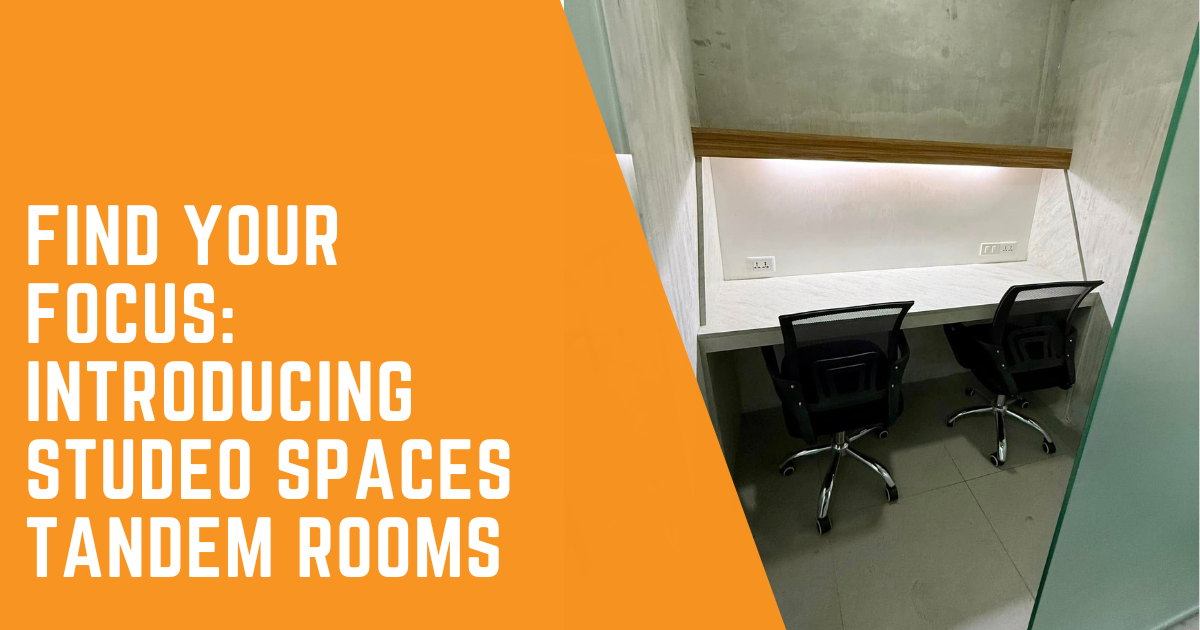
Find Your Focus: Introducing Studeo Spaces Tandem Rooms

Find Your Focus: Introducing Studeo Spaces Tandem Rooms

Studeo Spaces Tandem Rooms: Finding a productive and comfortable workspace in today’s fast-paced world can be challenging. Whether you’re a student cramming for exams, a freelancer tackling a deadline, or a professional needing a distraction-free environment for client calls, the right setting can significantly boost your efficiency. Recognizing this need, Studeo Spaces has introduced a revolutionary solution: Tandem Rooms, private spaces designed for collaborative work or focused individual pursuits.

Unleash Your Productivity with Tandem Rooms

For a remarkably affordable price of just P500 per room for eight hours (8:00 AM to 4:00 PM or 4:00 PM to 12:00 MN), these air-conditioned and soundproofed havens offer the perfect environment for a wide range of activities:

  • One-on-one study sessions: Perfect for students and tutors or even for partners reviewing projects together.
  • Tutoring sessions: A conducive space for tutors and students to focus and maximize learning.
  • Two-person video calls: Collaborate seamlessly with colleagues or clients without the distractions of a typical home office.
  • Zoom meetings: Conduct professional meetings confidently, ensuring clear audio and video quality.
  • Podcasts: Record high-quality audio in a soundproof environment, minimizing background noise.
  • Online presentations: Deliver impactful presentations with a professional backdrop and stable internet connection.
  • Sales calls: Close deals effectively in a distraction-free setting, maximizing your focus and professionalism.
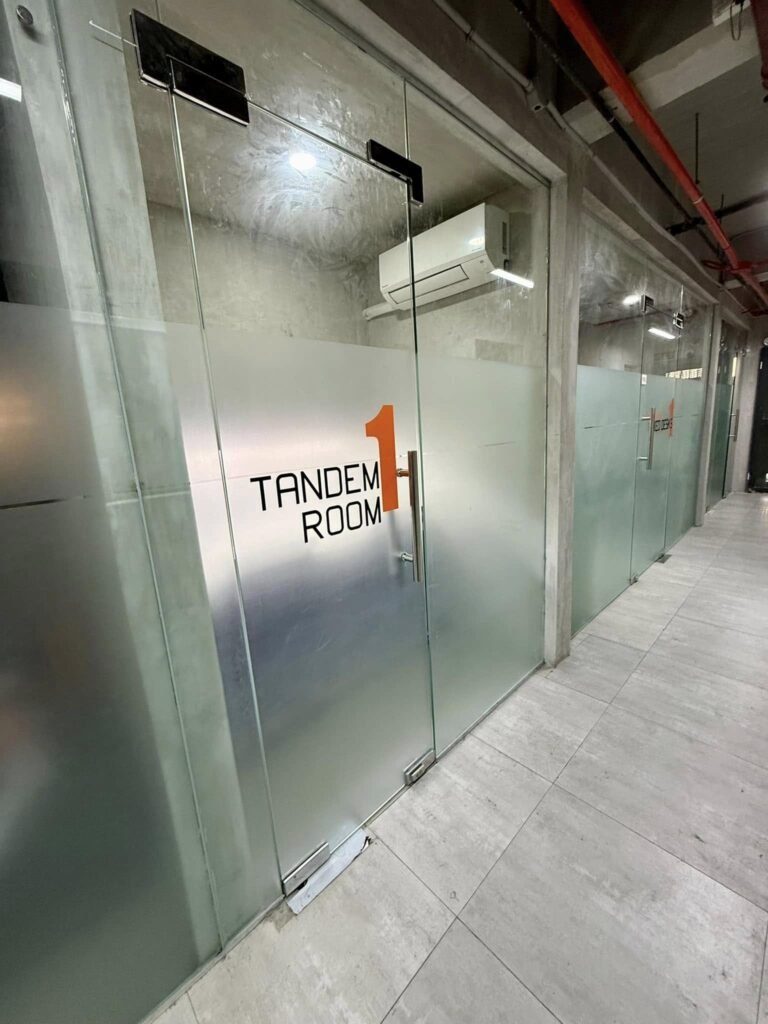
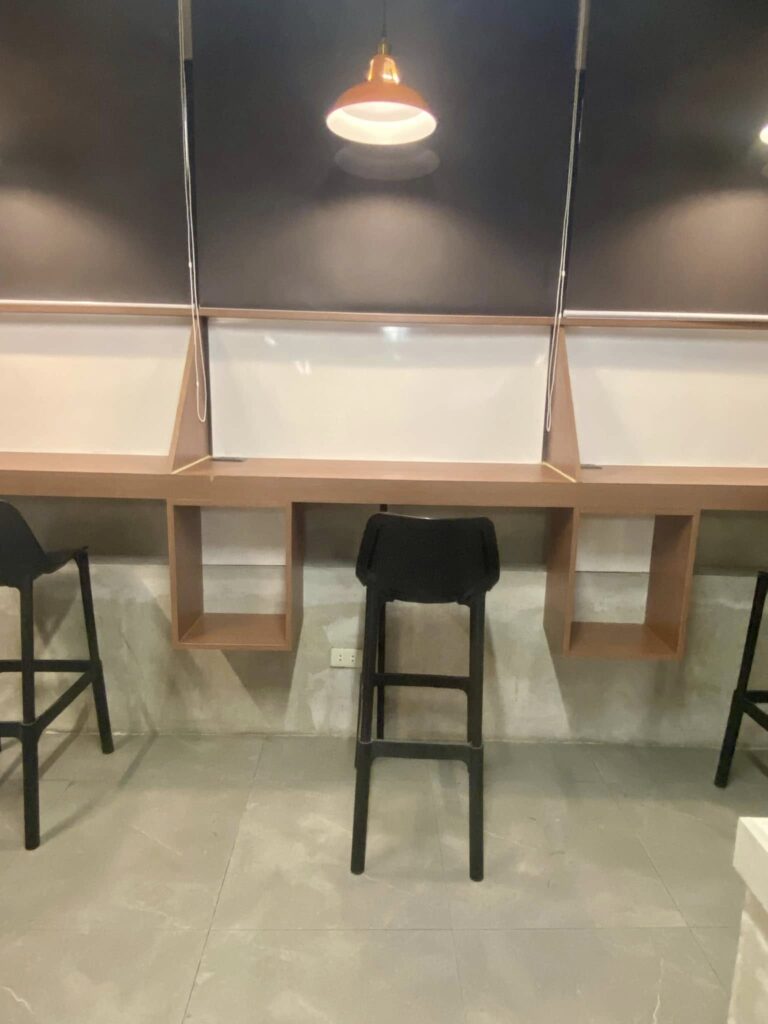
Studeo Spaces Tandem Room 1

Tandem Room: Features Designed for Optimal Productivity

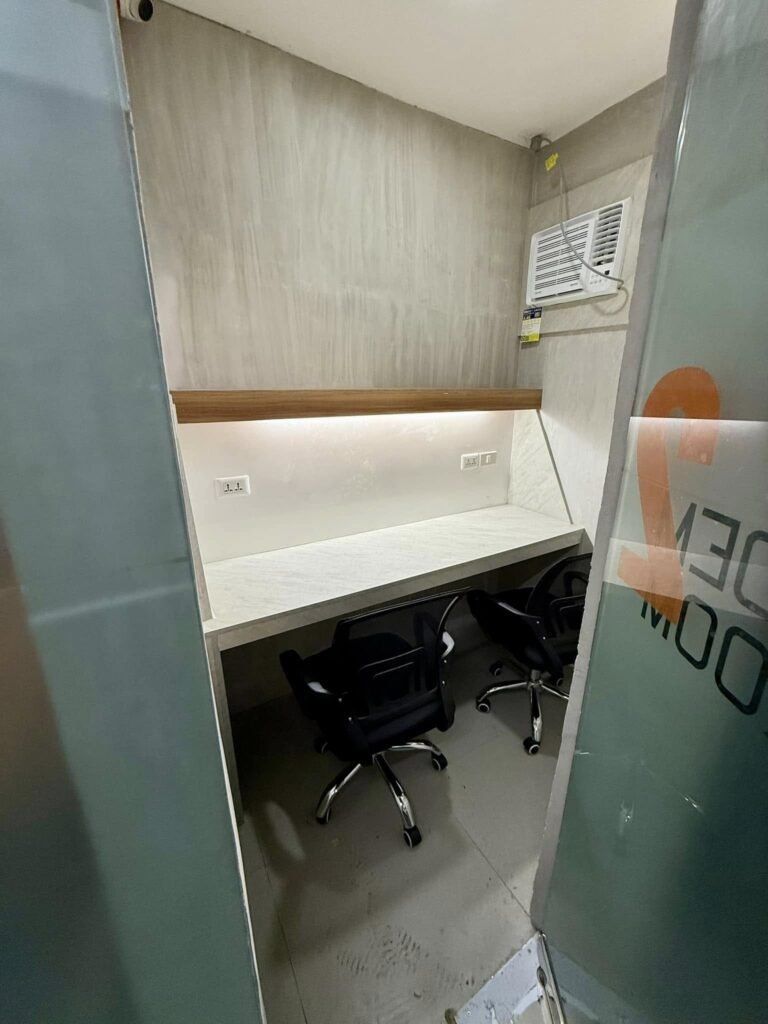
Studeo Spaces has meticulously designed the Tandem Rooms to cater to the diverse needs of its users:

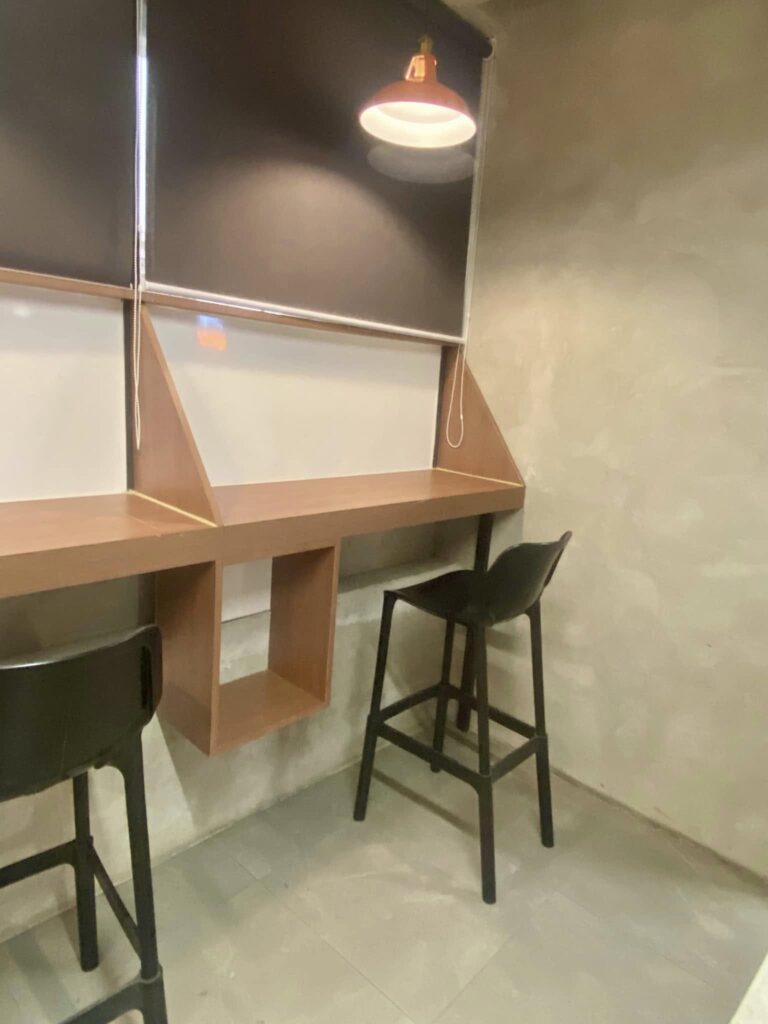
  • Spacious work area: Each room boasts a 1.7-meter-wide desk, providing ample space for two individuals to work comfortably side-by-side.
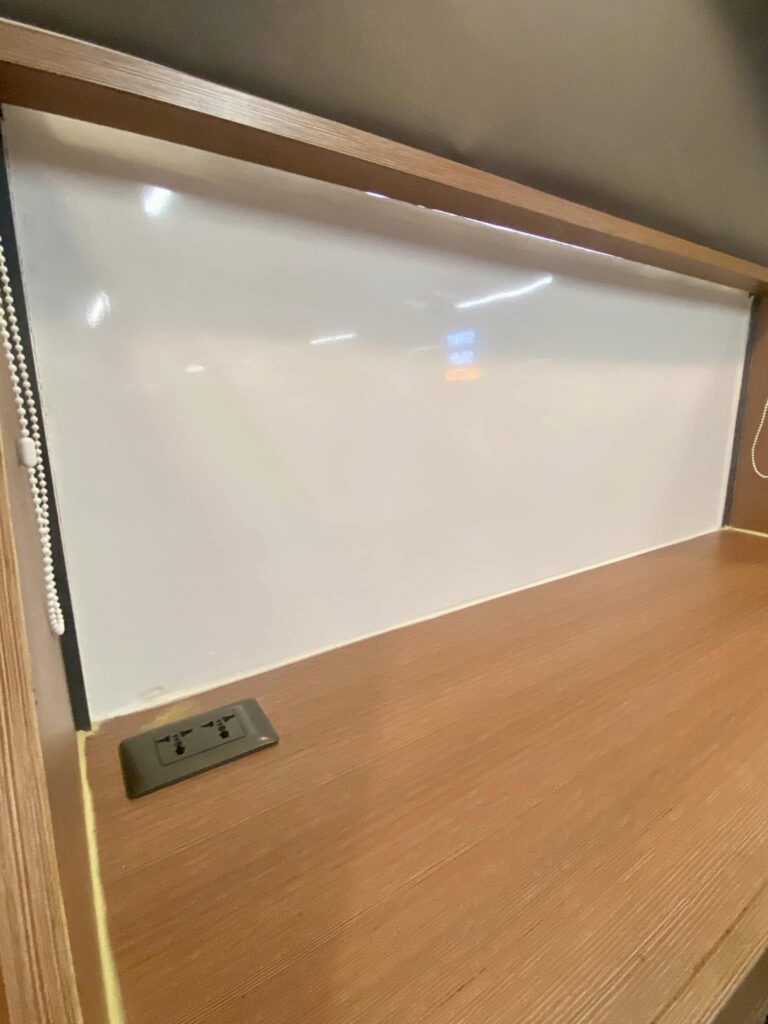
  • Essential amenities: A whiteboard is included for brainstorming and note-taking, while four power outlets ensure all your devices stay charged.
  • Uninterrupted connectivity: Enjoy fast, stable, and reliable Wi-Fi powered by three fiber internet service providers. Each room has a dedicated Wi-Fi access point, guaranteeing a strong and consistent connection.
  • Uninterrupted power supply: Say goodbye to power outages disrupting your workflow.
  • Recharge and rejuvenate: Take a power nap in the nap pods (subject to availability) to refresh and re-energize between work sessions.
  • Fuel your productivity: Enjoy free-flowing brewed coffee and refreshing cold beverages (iced tea, juice, or lemonade) to keep you going throughout the day.
  • Convenient pantry access: The free pantry use allows you to store and prepare meals and snacks. Outside food is also welcome.
  • Flexible usage: Enjoy unlimited use of the Tandem Rooms. Come and go as frequently as needed within eight-hour time blocks (8:00 AM to 4:00 PM or 4:00 PM to 12:00 MN).
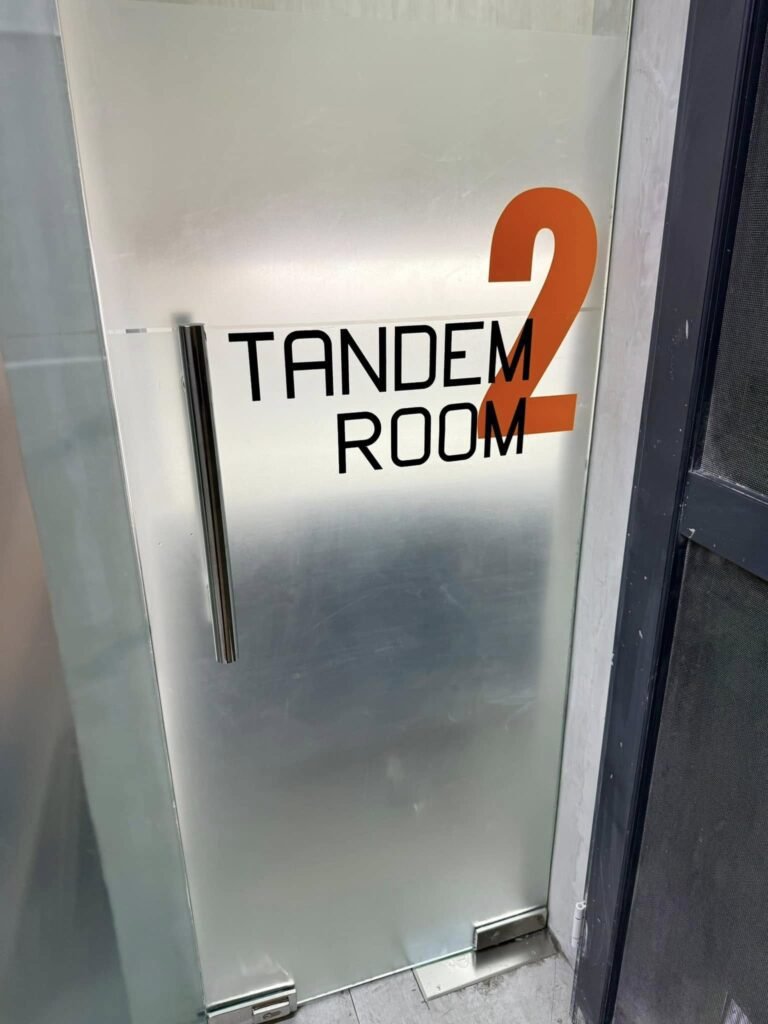
Studeo Spaces Tandem Room 2

Tandem Rooms: Accessibility and Convenience

Studeo Spaces is conveniently located at the corner of Dapitan and Dela Fuente Streets in Sampaloc, Manila, with easy access via public transportation. The building also houses a 7-11 on the ground floor for your convenience.

Open to All, Always

Studeo Spaces Tandem Rooms is open seven days a week, including holidays and inclement weather, ensuring you can access a productive workspace whenever needed. Unlike many co-working spaces, Studeo Spaces does not host private events, guaranteeing uninterrupted access for all members.

Experience the Studeo Spaces Tandem Room Difference

Studeo Spaces is more than just a co-working space; it’s a community that fosters productivity and creativity. With its affordable pricing, comprehensive amenities, and commitment to customer satisfaction, Studeo Spaces is the ideal solution for individuals and teams seeking a professional and inspiring work environment.

Find us on Google Maps/Waze/Grab: Search for “Studeo Suites” or “Studeo Spaces” to quickly locate our convenient location.

Visit Studeo Spaces today and discover the difference that a dedicated and inspiring workspace can make in your productivity.

Stay Connected:

Frequently Asked Questions about Studeo Spaces Tandem Rooms

What are Studeo Spaces Tandem Rooms, and who are they designed for?

Studeo Spaces Tandem Rooms are private, soundproofed spaces designed for collaborative work or focused individual pursuits. They are ideal for students needing a study environment, freelancers working on deadlines, professionals requiring a distraction-free setting for calls and meetings, or anyone needing a productive workspace outside of the home. The rooms are especially suitable for two people working together, hence the “tandem” name.

What is the cost, and what does it include?

The Tandem Rooms are priced at P500 per room for eight hours (8:00 AM to 4:00 PM or 4:00 PM to 12:00 MN). This includes access to an air-conditioned and soundproofed private room with a 1.7-meter wide desk, a whiteboard, four power outlets, fast and stable Wi-Fi via a dedicated access point, uninterrupted power supply, free brewed coffee and cold beverages (iced tea, juice, or lemonade), free pantry access, and use of nap pods (subject to availability). You also have unlimited access to the room during business hours, from 8:00 AM to 12:00 AM.

What kind of activities are suitable for the Tandem Rooms?

The rooms are suitable for various activities, including one-on-one study sessions, tutoring, two-person video calls, Zoom meetings, podcast recording, online presentations, and sales calls. The soundproofing and amenities provide a professional setting for these various tasks.

What are the key features and amenities of the Tandem Rooms that enhance productivity?

Key features include a spacious 1.7-meter wide desk for two people, a whiteboard for brainstorming, four power outlets for charging devices, fast and stable Wi-Fi with multiple fiber internet providers, a dedicated access point, and an uninterrupted power supply. Additionally, the rooms offer free brewed coffee and cold beverages, free pantry access, nap pods, and flexible usage during business hours. The soundproofing also significantly contributes to creating a distraction-free environment.

What is the location and accessibility of Studeo Spaces?

Studeo Spaces is located at the corner of Dapitan and Dela Fuente Streets in Sampaloc, Manila, making it easily accessible via public transportation. The building also conveniently houses 7-11 on the ground floor. It is also searchable on Google Maps, Waze, and Grab for “Studeo Suites” or “Studeo Spaces”.

What are the operating hours, and can I use the Tandem Rooms during holidays?

Studeo Spaces Tandem Rooms are open seven days a week, including holidays and during inclement weather, from 8:00 AM to 12:00 AM. This ensures access to a productive workspace whenever needed, without disruptions due to private events.

How does Studeo Spaces differentiate itself from other co-working spaces?

Studeo Spaces fosters productivity and creativity by providing affordable and well-equipped private rooms and does not host private events, ensuring uninterrupted access for all users. It offers comprehensive amenities, including complimentary beverages, pantry access, and nap pods, along with flexible hours. It is strategically located in Sampaloc, Manila, a busy part of the city for many students and workers. The “Tandem” focus for two people working together is also a distinguishing feature.

Are there other types of rooms or services available at Studeo Spaces?

Yes, while the focus is on Tandem Rooms, Studeo Spaces also offers other types of private rooms like “BarkadaAral Rooms”, “Solo Rooms”, and “Glassbox Night Shift”. They also provide services and passes like all-day and all-night passes and 15 or 30 day prepaid passes. The website offers several articles with tips for studying and exam preparation as well.
Posted on

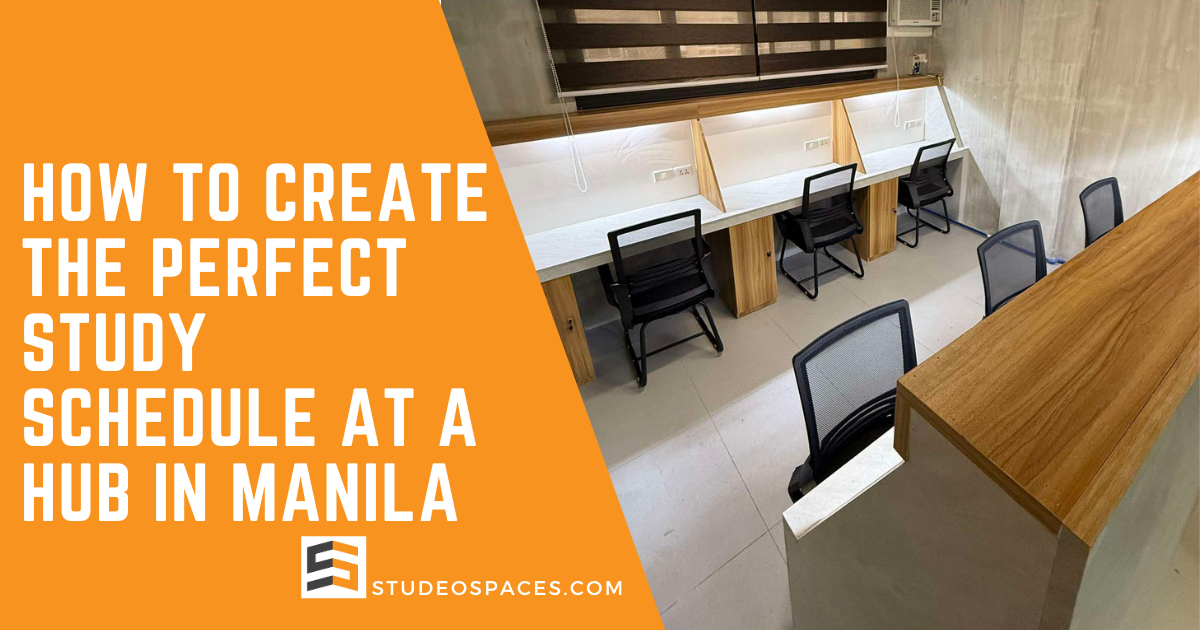
How To Create The Perfect Study Schedule At A Hub In Manila

How To Create The Perfect Study Schedule At A Hub In Manila

Creating an effective study schedule at a hub in Manila requires strategic planning and an environment conducive to focus and productivity. At Studeo Spaces Study Hub in Sampaloc, individuals can experience an optimal atmosphere explicitly designed to enhance concentration and aid in achieving their academic and professional goals. By utilizing the unique features of this premier study destination, students and professionals can organize their time effectively, prioritize their tasks, and dive deep into a state of flow—uninterrupted and hyper-productive work.

Studeo Spaces Study Hub stands out for its unwavering commitment to fostering an environment where distractions are minimized and productivity is maximized, ultimately leading to better performance in tests and examinations. With accessible hours and a location designed to serve as a haven for focused study, Studeo Spaces Study Hub is the ideal choice for those striving to unlock their full potential. How To Create The Perfect Study Schedule At A Hub In Manila

Have you ever struggled to balance your study schedule, especially in a bustling city like Manila? Indeed, devising a structured and efficient study plan is paramount to success, yet it can be daunting for many students and professionals. This article will walk you through creating the perfect study schedule at a study hub in Manila, optimizing your time, and enhancing your productivity.

Choosing the Right Study Hub

Strategic Location

The location of your study hub is crucial for convenience and focus. Ideally, the hub should be easily accessible through various modes of transportation. A location near your home or university will save time and reduce stress. For students in Manila, hubs around key educational institutions provide a strategic advantage.

Facilities and Infrastructure

Modern study hubs provide more than just a desk and chair. Look for facilities that offer high-speed internet, comfortable seating, adequate lighting, and other amenities such as cafés or lounges. These features collectively contribute to a conducive study environment.

Ambiance and Environment

The ambiance of a study hub can significantly impact your concentration and motivation. A quiet, clean, and organized space fosters concentration and minimizes distractions, allowing you to immerse fully in your study tasks.

Study Schedule: Setting Clear Goals and Objectives

Long-term Goals

Before crafting a study schedule, it is essential to outline your long-term academic or professional objectives. These could range from excelling in an upcoming exam to mastering a specific skill or completing a project. Clear long-term goals provide a roadmap and motivate you to persist through challenges.

Short-term Objectives

Breaking down your long-term goals into manageable short-term objectives can make your study plan more achievable. Weekly and daily targets offer immediate milestones that guide your daily activities and help maintain motivation.

Study Schedule: Time Management Techniques

The Pomodoro Technique

One of the most effective time management strategies is the Pomodoro Technique. It involves studying for 25 minutes, followed by a 5-minute break. After four cycles, take a more extended break of 15-30 minutes. This technique encourages sustained concentration and regular breaks, reducing burnout.

Time Blocking

Time blocking is another valuable strategy for dedicating specific time slots for different tasks. This method aids in avoiding multitasking, ensuring focused and efficient use of time. Allocate blocks for studying, revising, and taking breaks.

Prioritizing Tasks

Always prioritize tasks based on their urgency and importance. Use the Eisenhower Matrix to categorize tasks into four quadrants: important and urgent, important but not urgent, urgent but not necessary, and neither urgent nor essential. This helps manage time effectively and focus on high-impact activities.

Crafting Your Study Schedule

Assessing Your Current Commitments

Begin by evaluating your current commitments, such as classes, work, and personal obligations. Understanding your existing schedule helps identify available study slots and avoid over-scheduling, which can lead to stress and burnout.

Creating a Weekly Template

Develop a weekly template to visualize your study schedule. A template provides structure and ensures consistency. While creating this template, include regular study sessions, revision times, and breaks.

TimeMondayTuesdayWednesdayThursdayFridaySaturdaySunday
8:00 – 10:00Morning StudyMorning StudyMorning StudyMorning StudyMorning StudyMorning ReviewRest/Review
10:00 – 12:00Class/LectureStudy SessionTask/ProjectStudy SessionTask/ProjectStudy SessionTask/Project
12:00 – 1:00Break/LunchBreak/LunchBreak/LunchBreak/LunchBreak/LunchBreak/LunchBreak/Lunch
1:00 – 3:00Study SessionClass/LectureStudy SessionStudy SessionClass/LectureStudy SessionStudy Session
3:00 – 5:00Task/ProjectTask/ProjectTask/ProjectClass/LectureTask/ProjectTask/ProjectTask/Project
5:00 – 7:00Break/DinnerBreak/DinnerBreak/DinnerBreak/DinnerBreak/DinnerExercise/LeisureBreak/Dinner
7:00 – 9:00Evening StudyEvening StudyEvening StudyEvening StudyEvening StudyEvening StudyEvening Study
9:00 – 10:00LeisureLeisureLeisureLeisureLeisureLeisureLeisure

Study Schedule: Flexibility and Adjustments

While a rigid schedule provides structure, it is essential to remain flexible. Life’s uncertainties often demand spontaneous adjustments to your plan. Therefore, build some buffer time to accommodate unforeseen events or tasks.

Incorporating Effective Study Methods

Active Learning

Engage in active learning techniques, including summarization, questioning, and teaching others. Active learning promotes deeper understanding and retention compared to passive reading or listening.

Spaced Repetition

Spaced repetition involves reviewing information at increasing intervals to enhance long-term retention. Tools like Anki or Quizlet can help implement spaced repetition effectively.

Visualization and Mind Mapping

These techniques involve creating visual representations of the material. Mind maps and diagrams can simplify complex concepts, making them easier to remember and understand.

Study Schedule: Monitoring and Evaluating Your Progress

Regular Self-Assessment

Regularly assess your progress toward your short-term and long-term goals. Self-assessment helps identify areas for improvement and adjust your study techniques and schedule accordingly.

Seeking Feedback

Solicit feedback from peers, mentors, or tutors. Constructive feedback provides insights into your performance and areas that require more focused effort.

Study Schedule: Balancing Study and Personal Life

Importance of Breaks

Incorporate regular breaks into your study schedule to avoid burnout. Breaks help maintain mental and physical well-being, ensuring sustained productivity.

Pursuing Hobbies and Interests

Engage in activities outside of studying to maintain a balanced life. Pursuing hobbies and interests rejuvenates your mind and body, enhancing overall well-being and productivity.

Leveraging Technology

Study Apps

Utilize study and productivity apps such as Evernote, Trello, or Notion to organize your tasks, track progress, and set reminders. These apps can streamline your study process and enhance efficiency.

Online Resources

Take advantage of online resources, including tutorials, lectures, and articles. Platforms like Coursera, Khan Academy, and LinkedIn Learning offer valuable educational content that can complement your studies.

Connecting with Like-Minded Individuals

Study Groups

Joining or forming study groups can provide mutual support, different perspectives, and collaborative learning opportunities. Sharing knowledge and discussing concepts with peers enriches the learning experience.

Networking Opportunities

Study hubs often provide networking opportunities with like-minded individuals and professionals. Networking can lead to valuable relationships, knowledge exchange, and potential career opportunities.

Enhancing Concentration and Focus

Creating a Distraction-Free Environment

Eliminate potential distractions to maintain focus. This includes turning off notifications, setting boundaries with roommates or family members, and choosing a quiet study spot within the study hub.

Practicing Mindfulness and Meditation

Incorporate mindfulness practices and meditation into your routine to improve concentration and reduce stress. Simple breathing exercises and mindfulness techniques can significantly enhance your focus and productivity.

Study Schedule: Maintaining Physical and Mental Health

Regular Exercise

Incorporate regular physical activity into your daily routine. Exercise boosts cognitive function, reduces stress, and improves overall health, contributing to better study performance.

Healthy Eating

Maintain a balanced and nutritious diet to keep your mind and body in optimal condition. Avoid excessive caffeine and sugar, as they can lead to energy crashes and impair concentration.

Adequate Sleep

Ensure you get adequate sleep each night, as sleep deprivation can severely impact cognitive function, memory, and overall health. Aim for 7-9 hours of quality sleep per night.

Study Schedule: Planning for Peak Performance

Understanding Your Peak Hours

Identify your peak productivity hours and plan your most demanding tasks. Some individuals are more productive in the morning, while others may find the evening the best time to study.

Using Performance Data

Track your study habits and productivity using diaries or digital tools. Analyzing performance data helps understand what strategies work best and where improvements are needed.

Studeo Spaces Study Hub: The Ideal Environment for Your Studies

At Studeo Spaces Study Hub, located in Sampaloc, Manila, the emphasis is on creating an environment that cultivates hyper-productivity and focus, known as the “Flow State.” The carefully designed spaces aim to minimize distractions, enhance concentration, and empower individuals to achieve their fullest potential.

Features of Studeo Spaces Study Hub

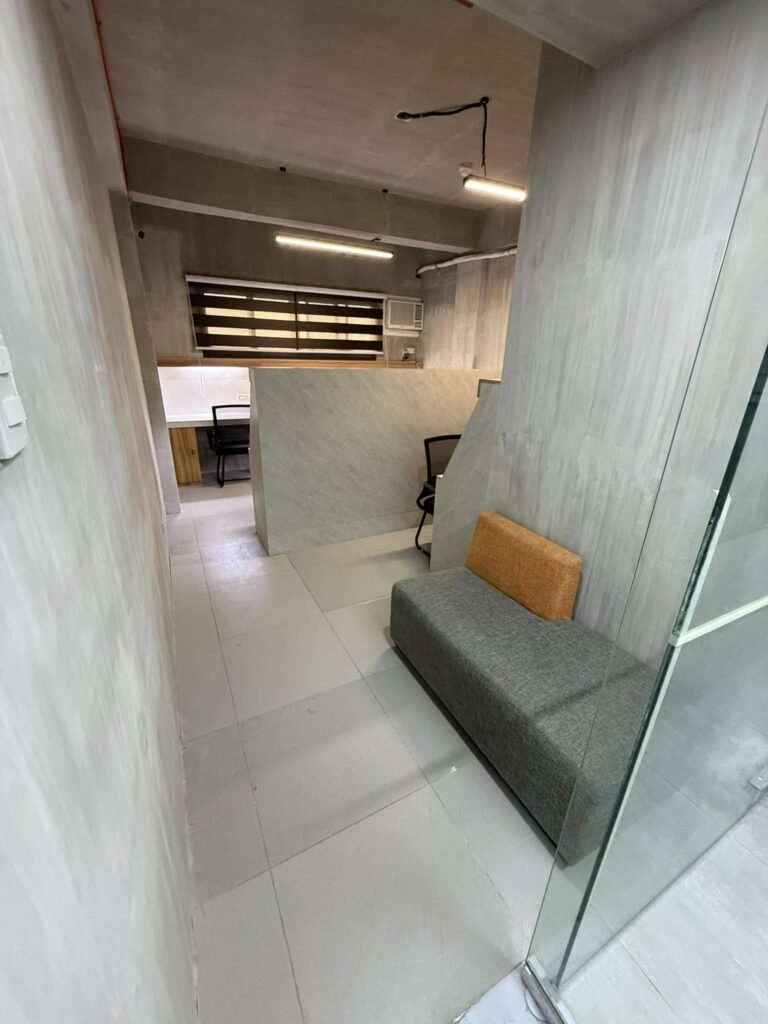
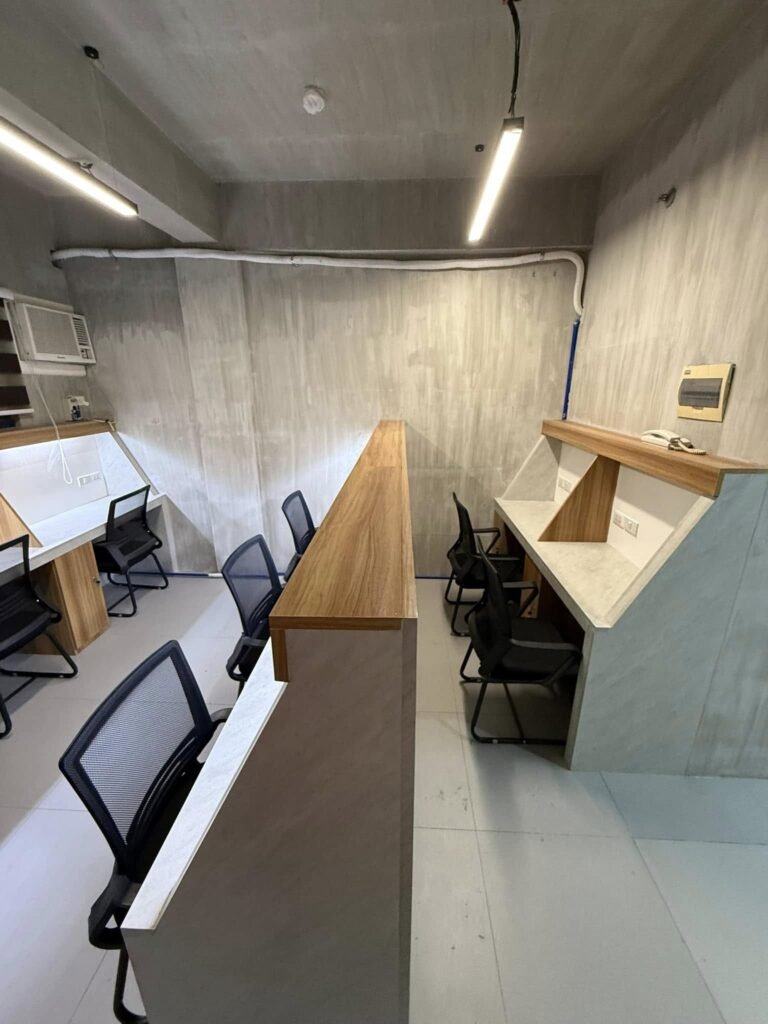
  • Optimal Study Environment: The hub provides a serene, organized, and quiet space, ideal for immersing oneself in study sessions without distractions.
  • Supportive Facilities: Equipped with high-speed internet, comfortable furniture, and essential amenities, Studeo Spaces ensures a productive study experience.
  • Flexible Access: Open every day from 8:00 AM to 3:00 AM, the hub accommodates different schedules and allows for frequent entry and exit without restrictions.
  • Strategic Location: Conveniently situated at the corner of Dapitan and Dela Fuente Streets, accommodation for easy access via various transport modes enhances convenience.

Achieving the Flow State

Studeo Spaces is committed to helping students and professionals get into the Flow State, a state of intense focus where productivity peaks. This environment is meticulously designed to eliminate distractions and provide everything necessary to help individuals dive deeply into their studies or work.

Commitment to Your Success

With a mission to support peak performance, Studeo Spaces Study Hub stands out from traditional co-working spaces by focusing specifically on the needs of those dedicated to academic and professional excellence. The hub’s “Get Into the Flow” tagline encapsulates this commitment, providing an ideal setting for preparing for exams or enhancing professional performance.

Accessibility and Convenience

Operating seven days a week, including weekends, holidays, and during inclement weather, Studeo Spaces Study Hub is always available when you need it most. This unwavering accessibility ensures that you can maintain a consistent study routine without interruptions.

Study Schedule: Conclusion

Creating the perfect study schedule in Manila starts with choosing the right study hub, setting clear goals, and employing effective time management techniques. Individuals can achieve optimal productivity by incorporating active learning, regular self-assessment, and balancing study with personal life. Leveraging the conducive environment of Studeo Spaces Study Hub further enhances the ability to reach the Flow State, streamline studies, and achieve academic and professional objectives. Embrace these strategies and witness a remarkable improvement in your study efficiency and overall performance.

Frequently Asked Questions About Study Schedule

What key factors should I consider when choosing a study hub in a bustling city like Manila?

When choosing a study hub, prioritize a strategic location that is easily accessible via various transportation options and close to your home or university to minimize travel time and stress. Look for hubs offering essential facilities like high-speed internet, comfortable seating, and adequate lighting. The ambiance is crucial, so choose a quiet, clean, and organized space to minimize distractions and enhance focus.

How can setting clear goals help me create an effective study schedule at a hub?

Setting clear long-term goals, like excelling in an upcoming exam or completing a project, provides a roadmap and motivates you to stay consistent with your studies. Breaking these into manageable short-term objectives, like weekly or daily targets, creates immediate milestones that guide daily activities and maintain focus. This approach turns large goals into achievable steps.

What time management techniques are most effective for optimizing study time?

Two highly effective time management strategies are the Pomodoro Technique, which involves studying for 25 minutes followed by a 5-minute break (with longer breaks after four cycles), and time blocking, where specific time slots are dedicated to different tasks. Also, prioritizing tasks based on urgency and importance using tools like the Eisenhower Matrix helps you concentrate on high-impact activities.

How should I balance my study schedule with my other commitments and personal life?

Begin by assessing your current commitments, including classes, work, and personal obligations, to identify available study slots without over-scheduling. Create a weekly template with regular study sessions, revision time, and breaks. It’s also vital to be flexible and incorporate buffer time for unforeseen events. Regularly take breaks and pursue hobbies to avoid burnout and enhance overall well-being.

What are some effective study methods I should incorporate into my routine?

Incorporate active learning techniques such as summarizing, questioning, and teaching others to deepen your understanding of the material. Utilize spaced repetition to enhance long-term retention. Mind mapping and visualization can simplify complex concepts and improve memorization. All these practices lead to a more engaging and efficient study experience.

How can a study hub like Studeo Spaces in Manila support my learning and productivity?

Studeo Spaces Study Hub stands out for its commitment to creating a hyper-productive environment aimed at helping individuals reach a state of “Flow,” where concentration and productivity are maximized. They minimize distractions with a serene, organized space and offer essential amenities such as high-speed internet and comfortable furniture. Their flexible access allows studying every day from 8:00 AM to 3:00 AM, including weekends and holidays, with easy entry and exit. Located at the corner of Dapitan and Dela Fuente Streets, it has easy accessibility.

Besides a good location and facilities, what else should I do to enhance focus and concentration while studying in a hub?

To enhance concentration, eliminate potential distractions by turning off notifications, establishing boundaries with others, and choosing a quiet study spot. Practicing mindfulness and meditation can improve your ability to focus and reduce stress. Regular exercise, a balanced diet, and adequate sleep are essential for maintaining physical and mental health, which significantly affects your ability to concentrate.

How can technology and networking support my studies within a study hub setting?

Utilize study and productivity apps to organize tasks, track progress, and set reminders. Take advantage of online resources to complement your studies. Joining study groups provides mutual support, diverse viewpoints, and collaborative learning opportunities. Networking with like-minded individuals and professionals at the study hub can lead to valuable relationships and career opportunities.

Glossary of Key Terms About Study Schedule

  • Active Learning: An approach to studying that involves actively engaging with the material, such as summarizing, questioning, and teaching, rather than passively reading or listening.
  • Eisenhower Matrix: A time management tool that categorizes tasks based on urgency and importance into four quadrants: important and urgent, important but not urgent, urgent but not necessary, and neither urgent nor essential.
  • Flow State: A state of deep concentration and immersion in an activity characterized by focused attention and high productivity.
  • Mind Mapping: A visual technique for organizing information by creating a central topic and branching out with related concepts and ideas.
  • Passive Learning: A study method that involves simply reading, listening, or watching without actively engaging with the material.
  • Pomodoro Technique: A time management method that involves working in focused intervals (typically 25 minutes) followed by short breaks, with longer breaks after several cycles.
  • Spaced Repetition: A learning technique that involves reviewing information at increasing intervals to enhance long-term memory and retention.
  • Time Blocking: A time management strategy involving dedicating specific time slots for different tasks or activities to ensure focused and efficient usage.
  • Study Hub: A physical location that facilitates focused study and learning, often equipped with high-speed internet, comfortable seating, and a quiet atmosphere.
  • Studeo Spaces Study Hub: A specific study hub in Sampaloc, Manila, emphasizes creating an environment conducive to hyper-productivity and the “Flow State.”
Posted on

Studeo Spaces FlexiRoom 1: Your Group Study Room for 2025!

Studeo Spaces Group Study Room FlexiRoom

FlexiRoom Group Study Room: Are you tired of cramped coffee shops and noisy libraries? Need a dedicated space for your group projects, thesis defenses, or brainstorming sessions? Look no further than Studeo Spaces FlexiRoom 1 Group Study Room, the perfect solution for productive collaboration.

For just P250 per person for 8 hours, you and your team can enjoy Studeo Spaces FlexiRoom 1 Group Study Room that affords:

  • Privacy and Focus: Our soundproofed and air-conditioned FlexiRoom provides a quiet, comfortable environment for uninterrupted work.
  • Ergonomic Comfort: Desks have individual lights, power outlets, and whiteboards to enhance productivity and creativity.
  • Enhanced Collaboration: Dedicated high-speed, fiber broadband internet with its own access point ensures smooth online collaboration and seamless video conferencing.
  • Convenience and Flexibility: Enjoy easy access to a pantry on the same floor and the option to extend your stay until 6:00 AM.
FlexiRoom Group Study Room

FlexiRoom Group Study Room Best For

  • Group Study Sessions: Perfect for tackling challenging coursework, reviewing for exams, and collaborating on projects.
  • Thesis Defense Preparations: A conducive environment for practicing presentations, discussing research findings, and fine-tuning arguments.
  • Team Meetings and Brainstorming: Unleash your team’s creativity and generate innovative ideas in a comfortable and collaborative setting.
  • Workshops and Training Sessions: Conduct small-scale workshops or training sessions for your team or organization.
FlexiRoom Group Study Room

Book Now & Experience the Difference of the Studeo Spaces FlexiRoom 1 Group Study Room

Advanced booking is highly recommended for the Studeo Spaces FlexiRoom 1 Group Study Room to secure your preferred time slot. Walk-ins are also welcome on a first-come, first-served basis, subject to availability.

Studeo Spaces Study Hub is conveniently located at the corner of Dapitan and Dela Fuente Streets, Sampaloc, Manila (7-11 on the ground floor). Find us easily on Google Maps/Waze/Grab by searching for “Studeo Suites” or “Studeo Spaces.”

Open 16/7:

Studeo Spaces FlexiRoom 1 Group Study Room is open from 8:00 AM to 12:00 MN daily. We operate 365 days a year, including holidays and during inclement weather.

Experience the Studeo Spaces difference today!

Note:

  • FlexiRoom 1 accommodates groups of 4 to 8 people.
  • No overnight stays are permitted.

Stay Connected:

Frequently Asked Questions About FlexiRoom Group Study Room

What is the Studeo Spaces FlexiRoom 1 Group Study Room, and who is it designed for?

The Studeo Spaces FlexiRoom 1 is a group study room that provides a productive and collaborative environment for groups of 4 to 8 people. It’s ideal for students working on group projects, preparing for thesis defenses, or teams needing a space for meetings and brainstorming sessions. It’s also suitable for small-scale workshops or training sessions. The goal is to offer an alternative to noisy coffee shops and cramped libraries.

What are the key features of the FlexiRoom 1 Group Study Room?

The FlexiRoom 1 boasts several features designed to enhance productivity. These include a soundproofed and air-conditioned room for a quiet and comfortable environment, ergonomic desks with individual lights, power outlets, and whiteboards. Additionally, it offers dedicated high-speed fiber broadband internet with its access point for smooth online collaboration and seamless video conferencing.

How much does it cost to use the FlexiRoom 1, and what are the time limits?

The FlexiRoom 1 costs P250 per person for 8 hours. While the standard booking is for 8 hours, there’s the option to extend the stay until 6:00 AM, subject to availability. However, overnight stays are not permitted.

Where is Studeo Spaces Study Hub located, and what are their operating hours?

Studeo Spaces Study Hub is located at the corner of Dapitan and Dela Fuente Streets, Sampaloc, Manila, easily findable on Google Maps/Waze/Grab by searching for “Studeo Suites” or “Studeo Spaces”. They are open from 8:00 AM to 12:00 MN daily, operating 365 days a year, including holidays and during inclement weather.

How can I book the FlexiRoom 1?

Advanced booking is highly recommended to secure your preferred time slot, but walk-ins are also welcome on a first-come, first-served basis, subject to availability. JUst message us through our Facebook Page Messenger system.

Besides FlexiRoom 1, what other study spaces does Studeo Spaces offer?

Studeo Spaces offers other options like Barkada (group) Rooms, Solo Rooms, and Glassbox Night Shift spaces. There are also options for All-Day, All-Night Passes, 15-Day Prepaid Passes, and a 30-Day Dedicated Desk Pass.

Does Studeo Spaces offer any resources or support for students beyond physical study spaces?

Yes, StudeoSpaces.com also has a blog section on its website featuring articles on various study-related topics. These include study and review strategies and tips, staying motivated while studying for board exams, top ways to improve exam-taking skills, and the best ways to manage exam anxiety. They also have articles about productivity and guides for studying hubs in Manila.

What efforts has Studeo Spaces made recently to improve its services?

Studeo Spaces has been actively working on improvements. Recently, they have added new All-Day Solo Rooms, are expanding their space to become bigger and better, and have introduced new high-top desks to enhance the study experience. This shows a commitment to continually providing updated services.

Posted on

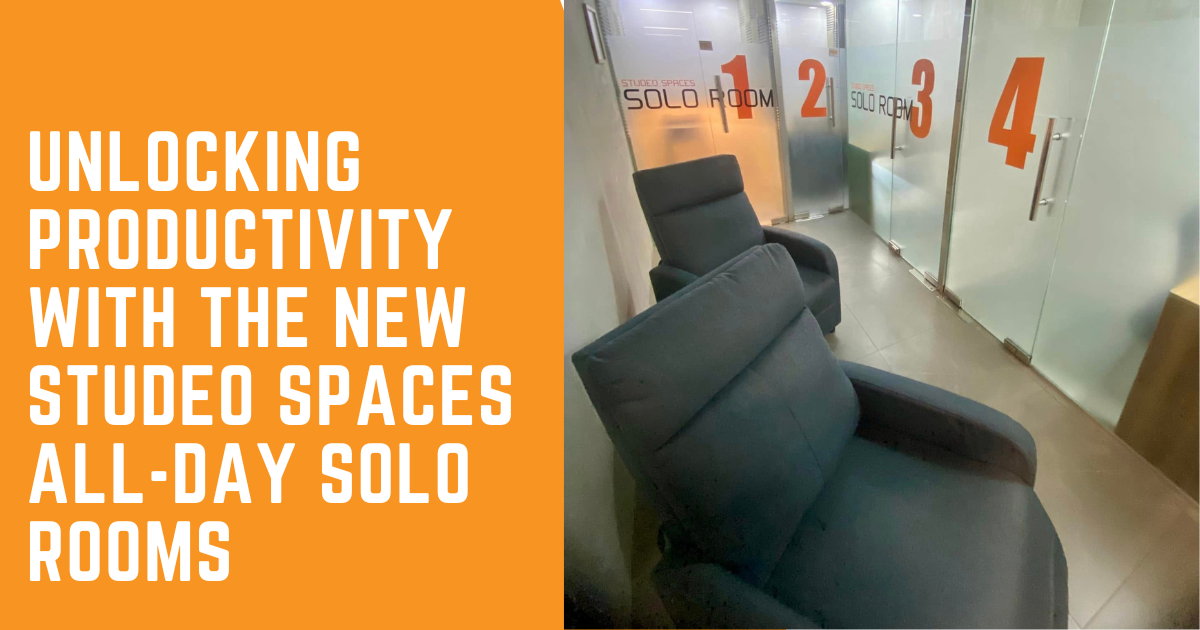
Unlocking Productivity with the New Studeo Spaces All-Day Solo Rooms

Studeo Spaces All-Day Solo Rooms

Studeo Spaces All-Day Solo Rooms: Studeo Spaces Study Hub, one of Manila’s biggest co-working and study hubs, officially re-opens its doors today, offering a unique and affordable solution for remote workers, freelancers, and students.

Situated in the heart of Manila City, Studeo Spaces presents an enticing proposition: three all-day solo rooms available for just P500 for 16 hours of uninterrupted use from 8:00 AM to 12:00 MN. This all-inclusive package caters to a diverse range of professionals and individuals seeking a dedicated and conducive environment for their work or studies.

Studeo Spaces All-Day Solo Rooms

All-Day Solo Rooms Features

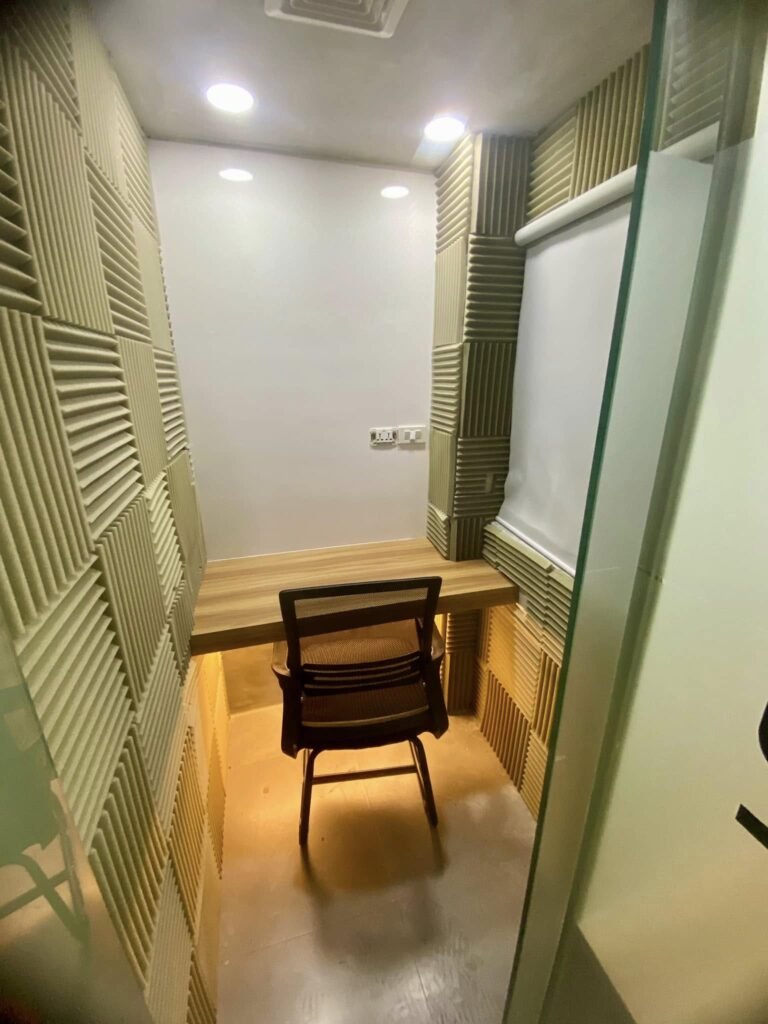
The all-day solo rooms are meticulously designed with productivity in mind. Each space is air-conditioned and soundproofed, ensuring a quiet, focused atmosphere ideal for video calls, online meetings, presentations, and sales calls. Spacious desks, ranging from 0.9 to 1.2 meters wide, provide ample room for laptops, paperwork, and even a personal whiteboard.

Robust and reliable internet connectivity is a cornerstone of the Studeo Spaces experience. Three fiber internet service providers ensure a consistently fast and stable connection, complemented by dedicated in-room Wi-Fi access points for optimal signal strength. An uninterrupted power supply further guarantees smooth workflow, minimizing disruptions.

Beyond the essential workspace, Studeo Spaces offers a range of amenities to enhance the user experience. Free use of nap pods (subject to availability) provides a rejuvenating break during long work sessions. A well-stocked pantry, equipped with a refrigerator and microwave, allows for convenient meal storage and preparation, while free-flowing brewed coffee and refreshing beverages (iced tea, juice, or lemonade) keep users energized throughout the day.

Furthermore, the “unli-use” policy grants unparalleled flexibility. Guests can come and go as needed, allowing for personal errands or quick breaks without losing their workspace. This feature is particularly beneficial for those with unpredictable schedules or requiring occasional breaks throughout the day.

Studeo Spaces prioritizes user convenience and accessibility. Reservations can be made in advance, while walk-ins are also welcome on a space-available basis. The co-working space maintains consistent business hours from 8:00 AM to 12:00 MN, operating seven days a week, including holidays and inclement weather. Unlike traditional co-working spaces, Studeo Spaces does not host private events, ensuring a consistently productive and distraction-free environment for all users.

Located at the corner of Dapitan and Dela Fuente Streets in Sampaloc, Manila, Studeo Spaces is easily accessible. The 7-11 on the ground floor serves as a convenient landmark. For those navigating via digital platforms, the co-working space is easily found on Google Maps, Waze, and Grab under the names “Studeo Suites” or “Studeo Spaces.”

Studeo Spaces represents a significant step forward in the evolution of co-working spaces. By offering a unique blend of affordability, comprehensive amenities, and unwavering commitment to user productivity, Studeo Spaces aims to become the preferred workspace for individuals seeking a dynamic and supportive environment to achieve their professional and personal goals.

Studeo Spaces is positioning itself as a unique and affordable co-working space option in Manila, particularly for those needing individual-focused work areas with flexible terms and reliable amenities. The new all-day solo rooms, added amenities and the “unli-use” policy, seem like a compelling offering for students, freelancers, and remote workers. Their commitment to a distraction-free environment further reinforces their dedication to user productivity. The company also seems to understand the importance of digital presence and content marketing, ensuring easy access and a knowledge base for their potential customers.

Frequently Asked Questions About Studeo Spaces All-Day Solo Rooms

What are Studeo Spaces All-Day Solo Rooms, and who are they designed for?

Studeo Spaces All-Day Solo Rooms are private, individual workspaces designed for remote workers, freelancers, and students. They provide a dedicated and conducive environment for work or study, offering a quiet, focused atmosphere with various amenities.

How long can I use a solo room and what does it cost?

You can use a solo room for up to 16 hours, from 8:00 AM to 12:00 MN, for a flat rate of P500. This all-inclusive package allows you to come and go as needed during those hours.

What amenities are included with the all-day solo rooms?

Each solo room is equipped with air conditioning, soundproofing, a spacious desk (0.9 to 1.2 meters wide), and in-room Wi-Fi. Studeo Spaces also provides access to a pantry with a refrigerator and microwave, free-flowing brewed coffee and other beverages, and nap pods (subject to availability). There is also a dedicated in room wifi access point, and uninterrupted power supply.

What kind of internet connection can I expect at Studeo Spaces All-Day Solo Rooms?

Studeo Spaces prioritizes reliable internet connectivity, utilizing three fiber internet service providers. In addition to this, there are dedicated Wi-Fi access points inside each solo room to optimize the signal strength.

Can I book a solo room in advance, or are walk-ins allowed?

Reservations can be made in advance to secure a solo room. Walk-ins are also welcome, subject to availability.

What are the operating hours of Studeo Spaces All-Day Solo Rooms?

Studeo Spaces is open from 8:00 AM to 12:00 MN, seven days a week, including holidays and during inclement weather. This allows for flexibility and reliable access to the workspace.

Where is Studeo Spaces located?

Studeo Spaces is located at the corner of Dapitan and Dela Fuente Streets in Sampaloc, Manila. The 7-11 on the ground floor serves as a convenient landmark. It can also be found on Google Maps, Waze, and Grab under “Studeo Suites” or “Studeo Spaces.”

Does Studeo Spaces Study Hub host private events?

No, Studeo Spaces does not host private events. This ensures that the environment remains consistently productive and free from distractions for all users.

Posted on

Exciting News: Studeo Spaces Study Hub is Getting Bigger and Better!

Studeo Spaces Study Hub is Getting Bigger and Better!

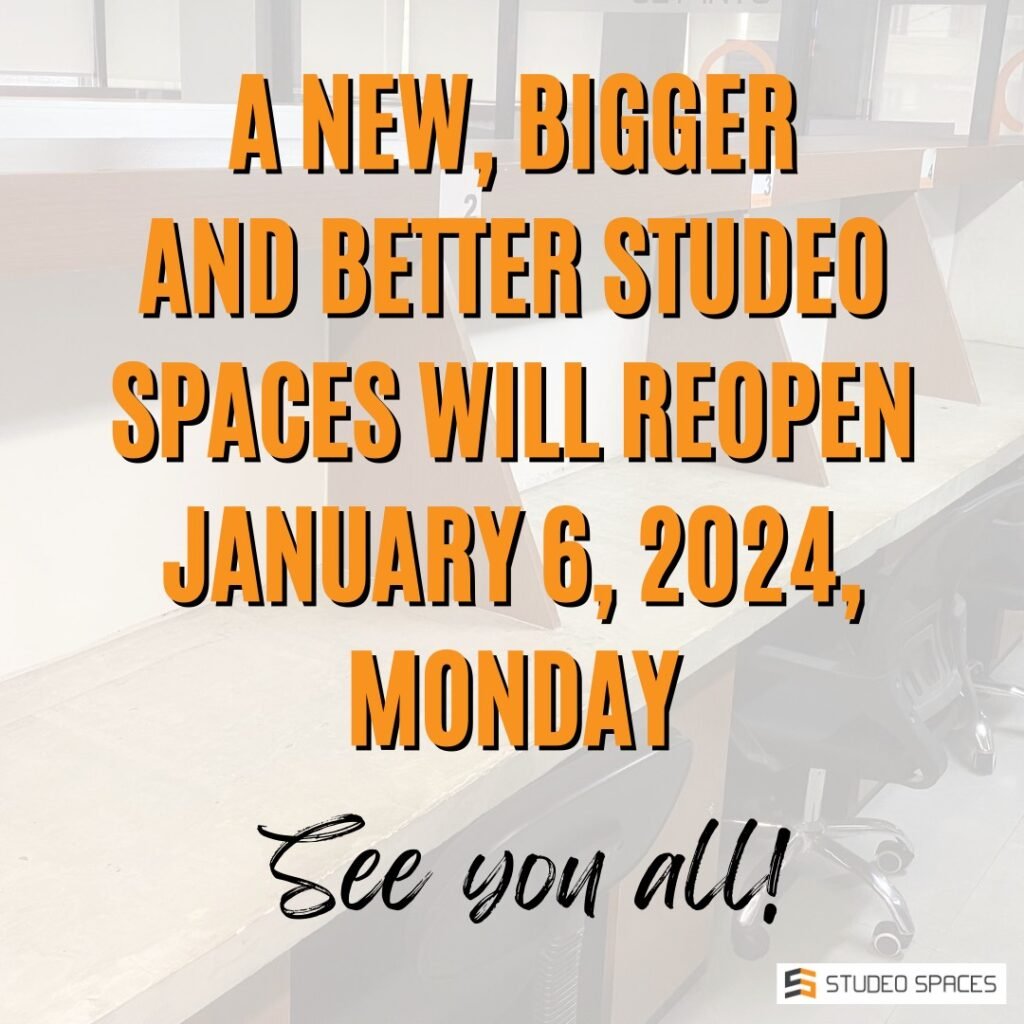
We have some exciting news to share! Studeo Spaces Study Hub will be undergoing renovations and expansion from December 24, 2024 (Tuesday) at 12:01 AM to January 5, 2025 (Sunday) to serve our valued customers better and provide an even more conducive learning environment.

We understand this may cause some inconvenience, and we sincerely apologize for any disruption this may cause to your study schedules.

What’s in Store for You?

But don’t worry, these temporary closures are for a good reason! We’re working hard to bring you an enhanced study experience with the following exciting additions:

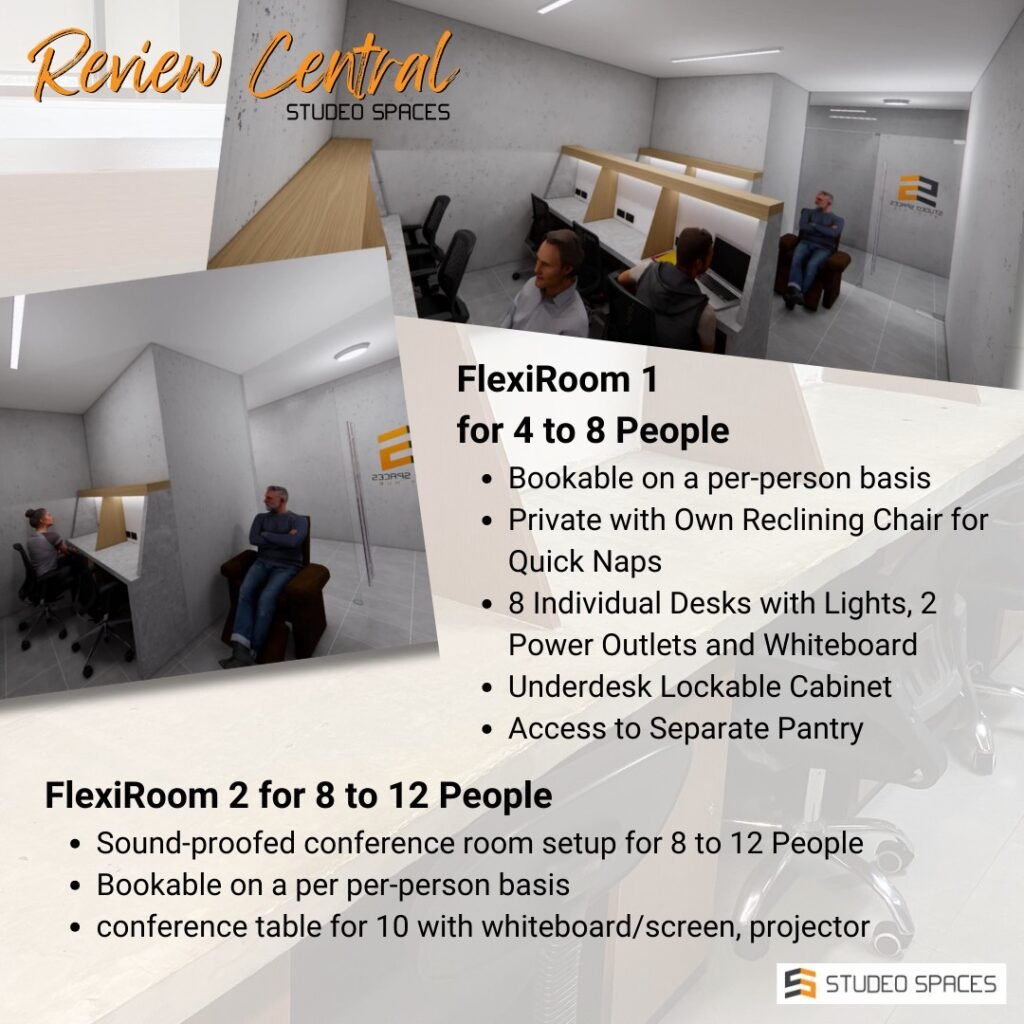
  • FlexiRoom 1: Designed for groups of 5 to 8 people, this versatile space will feature individual desks, perfect for collaborative projects, group study sessions, or small workshops.
  • FlexiRoom 2: Ideal for teams or larger groups, this spacious FlexiRoom can accommodate 8 to 12 people in a comfortable conference room setup.
  • Expanded Solo Study Options: We’re adding two more private and soundproof Phone-Booth Type Solo Rooms for all-day use. These cozy spaces are perfect for focused individual study or online meetings, available for a convenient all-day rate of P500.
  • Introducing Tandem Rooms: Experience the ultimate privacy with our new Tandem Rooms! These private rooms are ideal for tutoring sessions, podcast recordings, or even focused study sessions for couples, ensuring a distraction-free environment.

Reopening Soon!

We’re thrilled to welcome you back to a refreshed and expanded Studeo Spaces Study Hub on Monday, January 6, 2025, at 8:00 AM.

Location

Studeo Spaces Study Hub is conveniently located at the corner of Dapitan and Dela Fuente Streets, Sampaloc, Manila (7-11 on the ground floor).

Find Us Easily

Use Google Maps, Waze, or Grab with the search terms “Studeo Suites” or “Studeo Spaces” for easy navigation.

Thank You for Your Understanding

We appreciate your understanding and patience during this brief closure. We are committed to providing you with the best possible study environment and are confident that these improvements will significantly enhance your experience at Studeo Spaces.

We look forward to welcoming you back to a newer, bigger, and better Studeo Spaces Study Hub on January 6th!

Stay Connected:

Studeo Spaces Study Hub is undergoing exciting renovations and expansions to better serve its valued customers. Adding FlexiRoom 1 and FlexiRoom 2 for group study, along with more private and soundproof booth type Solo Rooms and unique Tandem Rooms, will provide a more diverse and enhanced study experience for everyone. These improvements, including new options for individual and group study, will be available starting January 6, 2025, at 8:00 AM.

Studeo Spaces is committed to providing a conducive and comfortable learning environment and appreciates your patience during this brief closure. Stay connected through social media for the latest updates and visit the website to book a desk or room.

Frequently Asked Questions About Studeo Spaces Latest Expansion and Renovation

Why is Studeo Spaces Study Hub temporarily closed from December 24 to January 5, 2025?

Studeo Spaces Study Hub is undergoing renovations and expansion to enhance the study experience for its customers. The closure will take place from December 24, 2024, to January 5, 2025. This will allow for the construction and implementation of new spaces and features.

What new spaces will be available after the renovation?

The expansion includes several new types of study areas: two “FlexiRooms” designed for group work, each accommodating 5-8 and 8-12 people respectively, two additional private “Phone-Booth Type Solo Rooms”, and new “Tandem Rooms” ideal for two people or tutoring sessions, podcast recording and focused study.

When will Studeo Spaces Study Hub reopen?

The newly renovated Studeo Spaces Study Hub will reopen on Monday, January 6, 2025, at 8:00 AM.

Where is Studeo Spaces Study Hub located?

Studeo Spaces Study Hub is located at the corner of Dapitan and Dela Fuente Streets, Sampaloc, Manila, with a 7-11 on the ground floor. It can easily be found by searching “Studeo Suites” or “Studeo Spaces” on Google Maps, Waze, or Grab.

What types of study options are available?

Studeo Spaces offers a variety of options including individual desks, group-friendly “FlexiRooms,” private “Solo Rooms,” and “Tandem Rooms” for two people or tutoring sessions. They also have “Barkadaral” rooms designed for group study for four hour blocks.

What are the rates for using the solo rooms?

The private and soundproof Phone-Booth Type Solo Rooms are available for all-day use at a rate of P500.

Does Studeo Spaces Study Hub accept debit/credit card and e-wallet payments?

Yes, Studeo Spaces Study Hub now offers credit and debit card payments, as well as various e-wallet payment options.

Besides study spaces, what other resources does Studeo Spaces offer?

Studeo Spaces provides blog articles on topics such as study strategies, exam preparation, and maximizing productivity, and a coffee shop run by Rekap Barista. Additionally, the study hub offers several kinds of passes including All-Day, All-Night Passes and Prepaid passes for 15 and 30 days.

Posted on

Mastering the Feynman Technique: A Guide for Students and Board Exam Aspirants

Mastering the Feynman Technique: A Guide for Students and Board Exam Aspirants

The Feynman Technique, developed by Nobel Prize-winning physicist Richard Feynman, is decisive for deep learning and understanding, not just memorization. This technique can be universally applied to any subject, whether you’re a student tackling coursework or a professional preparing for board exams. This post will guide you through the steps of the Feynman Technique and demonstrate how it can maximize productivity and results for students and board exam takers.

The Feynman Technique: A Guide for Students and Board Exam Aspirants

Who was Richard Feynman?

Richard Feynman was a renowned physicist who significantly contributed to quantum mechanics and particle physics. He was also a celebrated lecturer known for his ability to demystify complex topics. Feynman believed that anyone could learn anything through effort and a systematic approach. He wasn’t necessarily more intelligent than others, but he was exceptional in identifying gaps in his knowledge and working to understand concepts thoroughly. His learning process has been distilled into what is now known as the Feynman Technique.

The Feynman Technique: A Four-Step Process

The Feynman Technique is a four-step method that promotes active learning and proper comprehension. It moves beyond rote memorization and encourages a deeper engagement with the material. Here’s a detailed breakdown of each step:

Step 1: Select a Concept and Map Your Knowledge

The Feynman Technique: Select a Concept and Map Your Knowledge
  • Start with a blank page: Choose a topic you want to learn and write it at the top of a blank page in a notebook. This could be a chapter from a textbook, a specific concept from a syllabus, or a skill you want to acquire.
  • Jot down everything you know: Write down everything you already know about the topic as if you were explaining it to yourself. Use different colored pens for new information that you learn. This visualizes your understanding and helps you see where your knowledge is strong and lacking.
  • Focus on one concept at a time: Choose an idea that is narrow enough to be covered in one or two study sessions. Avoid tackling overly broad topics, as this can overwhelm and burnout. For example, instead of “Evolutionary Science”, choose “Negative selection”.
  • Acknowledge what you don’t know: Writing a topic on a blank page acknowledges that you are starting from scratch or at least filling in some blanks. This encourages a curiosity mindset.

This step is about acknowledging what you know and don’t know and being specific about your goals. This focused approach allows for deeper comprehension.

Step 2: Teach it to a 12-Year-Old

The Feynman Technique: Teach it to a 12-Year-Old
  • Explain the concept in simple terms: Once you’ve mapped your initial knowledge, write out an explanation of the idea in your own words, as if you were teaching it to a child. The goal is to simplify complex concepts into language that a 12-year-old could understand. If you can’t explain it, you haven’t grasped it fully.
  • Don’t use jargon or complex language: Avoid jargon or complicated terms. Focus on conveying the core ideas clearly and concisely.
  • Please write it down: Writing helps you organize your thoughts and reveal gaps in your understanding. Clear writing makes mistakes hard to ignore.
  • Teach it to yourself or someone else: Write a summary in your own words or explain the concept aloud. If possible, teach the concept to someone else. Teaching can reveal your misunderstandings when you have to articulate the ideas clearly.
  • Seek feedback: If you teach a real person, they can give feedback and ask questions, helping you to identify areas where your understanding isn’t clear. This feedback is a crucial part of the learning process.

This step is where you begin to engage with the material actively. Whether to yourself or others, teaching forces you to connect and articulate the ideas.

Step 3: Review and Refine, Fill the Gaps

  • Identify gaps in your knowledge: You will likely encounter gaps as you attempt to explain the concept. These gaps may be where you can’t explain something or get stuck.
  • Return to the source material: When you find weak spots, return to your learning resources—textbooks, notes, and online sources. Study those sections until you can explain them.
  • Re-write and refine your explanation: Once you understand the concept more clearly, rewrite your explanation to reflect your deeper comprehension. Repeat steps two and three until the idea is clear to you.
  • Focus on weaknesses: Study the areas where your understanding is weak to turn them into areas of strength.
  • Iterate: Learning is not a one-time process but rather an iterative process where you continuously revisit the material.

This step turns the learning process into an active cycle of identifying, filling, and solidifying your understanding of the subject.

The Feynman Technique

Step 4: Test and Archive, Simplify and Create Analogies

  • Test your understanding: Test your understanding of the topic by teaching it to someone else without using your notes. If you can explain it to someone else without looking at your notes, you will know you truly understand the topic.
  • Simplify your explanation: Streamline your notes and explanations until the topic is so clear that it seems obvious.
  • Create analogies: Think of analogies that make the concept more intuitive. Analogies help you recall and explain the idea more easily.
  • Archive for review: Once satisfied, archive your simple explanation in a learning binder for periodic review. This helps ensure long-term retention.
  • Break it down: Break down complex information into its simplest form—attempt to express it in a short and transparent way.
  • Distill to the core: Simplify your initial explanation and refine your understanding by using simple analogies.

This step is about solidifying your understanding and making the concept accessible to anyone. The ability to simplify complex topics is a sign of deep learning.

How the Feynman Technique Benefits Students and Board Exam Aspirants

The Feynman Technique offers numerous benefits for students and those preparing for board exams:

  • Deeper Understanding: It encourages proper comprehension rather than superficial memorization. By explaining concepts in simple terms, you’re forced to engage with the material at a deeper level.
  • Active Learning: The technique promotes active learning rather than passive reading. It involves selecting topics, researching, writing, explaining, and refining, all active processes improving retention.
  • Identification of Knowledge Gaps: Explaining concepts helps you identify gaps in your knowledge. This allows you to focus your study efforts on the areas where you need the most help.
  • Improved Retention: The active and iterative nature of the Feynman Technique helps create new neural pathways, which will enhance memory and make connections between concepts easier.
  • Builds Confidence: You develop confidence when you can explain a topic well. This can help you approach challenging subjects with a more positive mindset.
  • Enhanced Problem-Solving: Creating your analogies helps you understand the core components of a concept and their relationships. This makes breaking down problems and approaching them from different angles easier.
  • Long-Term Retention: The Feynman Technique helps you learn with intention, breaking down topics into digestible chunks, which improves your memory and reinforces learning.

Applying the Feynman Technique to Your Studies

To effectively use the Feynman Technique, consider these tips:

  • Choose Specific Topics: Instead of studying an entire chapter, select one key concept at a time.
  • Write Everything Down: Use a notebook or digital document to jot down everything you know. Writing it down helps to organize your thoughts and identify gaps in your understanding.
  • Teach Yourself: Practice explaining concepts aloud without looking at your notes. If you get stuck, return to your resources.
  • Get Feedback: Teach what you’ve learned to someone else and encourage them to ask questions.
  • Use Multiple Sources: As you become more comfortable with a concept, consult different source materials.
  • Be Iterative: Be prepared to return to the source materials and rewrite your explanations multiple times.
  • Use Task Management Tools: Use tools like Todoist to schedule your learning sessions and break down the Feynman Technique into smaller tasks. You can generate a list of tasks based on topics you will learn and then for each topic, you can add the steps of the technique as subtasks.
  • Pin Learning Projects: Use your task management tools to keep your learning at the top of your mind by pinning your learning projects.
  • Be Patient: Learning takes time, and it is essential to be patient and persistent in your learning.

Conclusion

The Feynman Technique is a powerful tool for students and those preparing for board exams. It’s a simple yet effective method for deeply learning and internalizing any subject. Following the four steps of the technique, you can move beyond rote memorization and develop a deeper understanding of the material. This will improve your academic performance and help you become a more effective and confident learner. In the long run, this approach also enables you to become a life-long learner, which is increasingly essential in a rapidly changing world.

Frequently Asked Questions About the Feynman Technique

What is the Feynman Technique, and who developed it?

The Feynman Technique is a learning method developed by the renowned physicist Richard Feynman. It’s a four-step process to understand a subject rather than just memorize facts deeply. Feynman believed that if you cannot explain something, you don’t truly understand it. This method emphasizes active learning, simplification, and identifying knowledge gaps.

What are the four key steps of the Feynman Technique?

The Feynman Technique comprises these four steps:
Step 1: Select a Concept and Map Your Knowledge: Choose a specific topic you want to learn and write down everything you know about it on a blank page. Use different colors to track new information as you progress. This helps create a visual map of your current understanding.
Step 2: Teach it to a 12-Year-Old (or Someone Else): Explain the concept in simple terms that a child could understand. If you struggle to explain it simply, you haven’t fully grasped it. Writing your explanations down is crucial for organizing thoughts, identifying gaps, and facilitating future review.
Step 3: Review and Refine: Identify any areas where you struggled to explain the concept in Step 2 and revisit your learning materials, focusing specifically on those weak points. Rewrite your notes/explanations as your understanding improves.
Step 4: Test and Archive: Test your understanding by teaching the concept to someone else without using your notes. Then, create a simplified explanation for future review. This step reinforces learning and aids long-term retention.

Why is teaching someone else or explaining aloud to yourself so crucial in this technique?

Teaching or explaining aloud is critical because it forces you to engage with the material actively. It exposes gaps in your knowledge that you may not have recognized simply by reading or taking notes. When you explain something, you must organize your thoughts, connect ideas, and articulate concepts. This active process deepens understanding and helps solidify the information in your memory. You must refine your knowledge further if you can’t explain a concept.

How does writing relate to learning with the Feynman Technique?

Writing plays a key role in several steps of the Feynman Technique. In step one, you map out your knowledge by writing everything you know about a topic, and in steps two and three, writing forces you to put ideas into your own words rather than just transcribing. This helps identify knowledge gaps, organizes your thoughts, and provides a record for future reviews. Writing forces better thinking provides an organized structure, and reveals the gaps that are difficult to ignore when seen on paper.

What is the importance of simplifying explanations in this method?

Simplifying explanations, particularly to the point where a child can understand, is essential because it reveals the depth of your understanding. Jargon and complex language can mask a lack of proper comprehension. If you can explain something, you truly grasp its essence and understand how a subject’s different elements fit together. Simplifying requires distilling knowledge to its most basic form and removing superficial understanding.

How do I use the “Return to Source Material” step effectively?

Returning to the source material is a targeted approach when you struggle to explain a concept. You revisit the specific areas of the material that you didn’t fully understand rather than passively rereading everything. It’s essential to study these sections until you can explain them simply and to rewrite and refine your explanations as your understanding improves. You can also begin to consult different source materials to broaden your knowledge. This iterative process helps you build a solid foundation.

How does the Feynman Technique differ from traditional memorization?

The Feynman Technique actively rejects memorizing facts without understanding their meaning. It favors proper comprehension through selection, research, writing, explaining, and refining. Traditional memorization might involve rereading or rote repetition, while the Feynman method engages your brain more actively, identifying and addressing gaps in your understanding. This technique is geared towards building deep and lasting comprehension.

Can the Feynman Technique be applied to skills other than academic subjects, and how might that work?

Yes, the Feynman Technique can be effectively applied to various skills, including sports, software development, or product design. The core steps remain the same: study, teach/explain, fill gaps, and simplify. For a skill like a sport, you might break down the key components of the technique or movement, then try to explain it to someone, identify gaps in your understanding, and then simplify it into its most crucial elements. It can be used in any situation that requires you to go from knowing the basics to achieving expertise.

Glossary of Terms for the Feynman Technique

  • Feynman Technique: A four-step learning method developed by Richard Feynman that emphasizes understanding concepts deeply through teaching and simplification.
  • Iterative Process: A process that involves repeating steps multiple times, making refinements and improvements with each repetition.
  • Deep Understanding: A thorough comprehension of a concept that goes beyond memorization and enables one to explain it clearly and simply.
  • Active Learning: A learning approach that involves active engagement with the material, such as teaching or writing, rather than passively absorbing information.
  • Passive Learning: A learning approach where the learner absorbs information without actively engaging with the material, such as reading or listening without deeper processing.
  • Analogies: Comparisons used to relate a complex concept to something simpler or more familiar, to aid in understanding and communication.
  • Knowledge Gaps: Areas where an individual’s understanding is incomplete or missing, which the Feynman Technique helps identify.
  • Simplification: The process of explaining a complex topic in basic terms and removing any unnecessary jargon or complexity.
  • Source Material: Books, articles, lectures, or other resources from which information is derived and used to learn a concept.
  • Long-Term Retention: The ability to remember and recall information over extended periods, which is a goal of the Feynman method.
Posted on

Conquer Your Studies: Experience Studeo Spaces’ New High-Top Desks

Studeo Spaces High-Yop Desks

Staying focused and energized throughout a long study session can be a challenge. Studeo Spaces Study Hub has the perfect solution if you are battling drowsiness at your desk! They are excited to introduce their new high-top desks, explicitly designed for those who prefer a more active working environment.

Studeo Spaces High-Top Desks

High-Top Desks: Stand Up and Conquer Your Workload

Unlike traditional seated desks, high-top desks encourage you to stand while you work. This can have several benefits, including:

  • Improved alertness and focus: Studies have shown that standing can increase blood flow to the brain, leading to sharper thinking and better concentration.
  • Enhanced energy levels: Standing burns more calories than sitting, which can help you feel more energized throughout the day.  
  • Reduced back pain: Sitting for long periods can strain your back muscles. Standing desks can help to alleviate this discomfort by promoting better posture.  
  • Boosted mood: Some evidence suggests that standing can improve your mood and reduce stress levels.  

Studeo Spaces’ High-Top Desks: Designed for Productivity

Studeo Spaces’ high-top desks are not just about providing a place to stand. They have been carefully designed to create an optimal workspace for those who prefer an active working environment. Here are some of the key features:

  • Spacious work surface: With a width of 1.25 meters, the desks provide ample space for your laptop, textbooks, and other study materials.
Studeo Spaces High-Top Desks Wide Desks
  • Power at your fingertips: Each desk has two built-in power outlets, so you can keep your devices charged and ready to go.
Studeo Spaces High-Top Desks Power Outlet and Whiteboard
  • Bright light for clear vision: Overhead soft task lighting ensures you have plenty of light to work by without straining your eyes.
  • Boost your creativity: A whiteboard surface directly on the desk allows you to brainstorm ideas, sketch concepts, or jot down important notes.
  • Organized storage: An under-desk shelf provides a convenient place to store your backpack, books, and other belongings.
Studeo Spaces High-Top Desks Under Desk Cabinet

Unbeatable Value with Studeo Spaces’ All-Day Pass

For a limited time, you can enjoy unlimited use of Studeo Spaces’ high-top desks (and all their other amenities) with the All-Day Pass for only P250! This pass grants you access to the study hub from 8:00 AM to 12:00 MN, giving you plenty of time to power through your studies or work.

In addition to the high-top desks, the All-Day Pass gives you access to all of Studeo Spaces’ other amenities, including:

  • Comfortable seating areas: If you need to take a break from standing, plenty of comfy chairs and couches are available.
  • Silent study rooms: Need some peace to focus? Studeo Spaces offers private study rooms that are perfect for concentrated work.
  • High-speed Wi-Fi: Stay connected and download your study materials with Studeo Spaces’ fast and reliable Wi-Fi.
  • Printing and photocopying services: Need to print out some notes or handouts? Studeo Spaces offers printing and photocopying services for a small fee.
  • Relaxation areas: Take a break from your studies and unwind in one of Studeo Spaces’ relaxation areas. These spaces are perfect for socializing with other students or simply taking a few minutes to clear your head.

Upgrade Your Study Experience with Studeo Spaces

If you’re looking for a study environment that will help you stay focused, energized, and productive, then Studeo Spaces is the perfect place. With their new high-top desks and unbeatable All-Day Pass, Studeo Spaces provides everything you need to succeed in your studies. So why not visit Studeo Spaces today and experience the difference for yourself?

Studeo Spaces’ introduction of high-top desks and the All-Day Pass demonstrates its commitment to providing a holistic and productivity-focused study environment. The study hub is innovating to solve common student issues like lack of focus and low energy during study sessions. The combination of physical and technical resources makes them a strong contender in the study space market.

Frequently Asked Questions About Studeo Spaces New High-Top Desks

What are the main benefits of using Studeo Spaces’ new high-top desks?

Studeo Spaces’ high-top desks are designed to promote a more active and focused study environment. The main benefits include improved alertness and focus due to increased blood flow, enhanced energy levels from standing, reduced back pain by promoting better posture, and even a boosted mood and reduced stress. These desks aim to combat drowsiness and provide a more invigorating workspace than traditional seated desks.

What features do the high-top desks at Studeo Spaces offer?

These high-top desks are equipped with several features to enhance productivity and convenience. They have a spacious 1.25-meter wide work surface, two built-in power outlets to keep devices charged, soft task lighting to reduce eye strain, a whiteboard surface for brainstorming, and an under-desk shelf for storing belongings.

What is included in the Studeo Spaces All-Day Pass, and what are its hours?

The All-Day Pass for P250 provides unlimited access to Studeo Spaces from 8:00 AM to 12:00 MN. It grants access to all of their amenities, including the new high-top desks, comfortable seating areas, silent study rooms for focused work, high-speed Wi-Fi, printing and photocopying services, and relaxation areas. This pass gives students a full day of access to support their studies.

Besides the high-top desks, what other types of study spaces does Studeo Spaces offer?

Studeo Spaces offers a variety of study environments to cater to different needs. Besides the high-top desk area, they also provide comfortable seating areas with chairs and couches, private silent study rooms for focused work, and even special rooms like “BarkadAral Rooms”, “Solo Rooms”, and “Glassbox Night Shift” rooms, catering to individuals and groups.

What additional services and amenities does Studeo Spaces provide?

Beyond study spaces, Studeo Spaces offers high-speed Wi-Fi, printing and photocopying services for a small fee, and relaxation areas. They are also frequently adding new amenities and partners like their Rekap Barista Coffee service. These services aim to enhance the overall study experience and ensure students have the tools they need.

Are there different options for accessing Studeo Spaces beyond the All-Day Pass?

Yes, in addition to the All-Day Pass, Studeo Spaces also offers a 15-Day Prepaid Pass, and a 30-Day Dedicated Desk Pass, suggesting flexibility in how users access the study hub based on their individual needs and usage frequency.

How does Studeo Spaces support study and learning beyond the physical environment?

Studeo Spaces has an active blog with articles that focus on study and review strategies, ways to improve exam-taking skills, how to manage exam anxiety, and tips for maximizing productivity through flow states. They provide links to these resources via their site. This shows that they’re actively invested in supporting their users’ learning.

What are some of the recent developments and new offerings at Studeo Spaces?

Recent news includes the addition of “BarkadAral Rooms” for four-hour use, the introduction of Rekap Barista Coffee at the location, and updates to the schedule, including for the Undas holiday, indicating Studeo Spaces is consistently adding new features and adapting to the needs of its users.